Physical Address
304 North Cardinal St.
Dorchester Center, MA 02124
Physical Address
304 North Cardinal St.
Dorchester Center, MA 02124

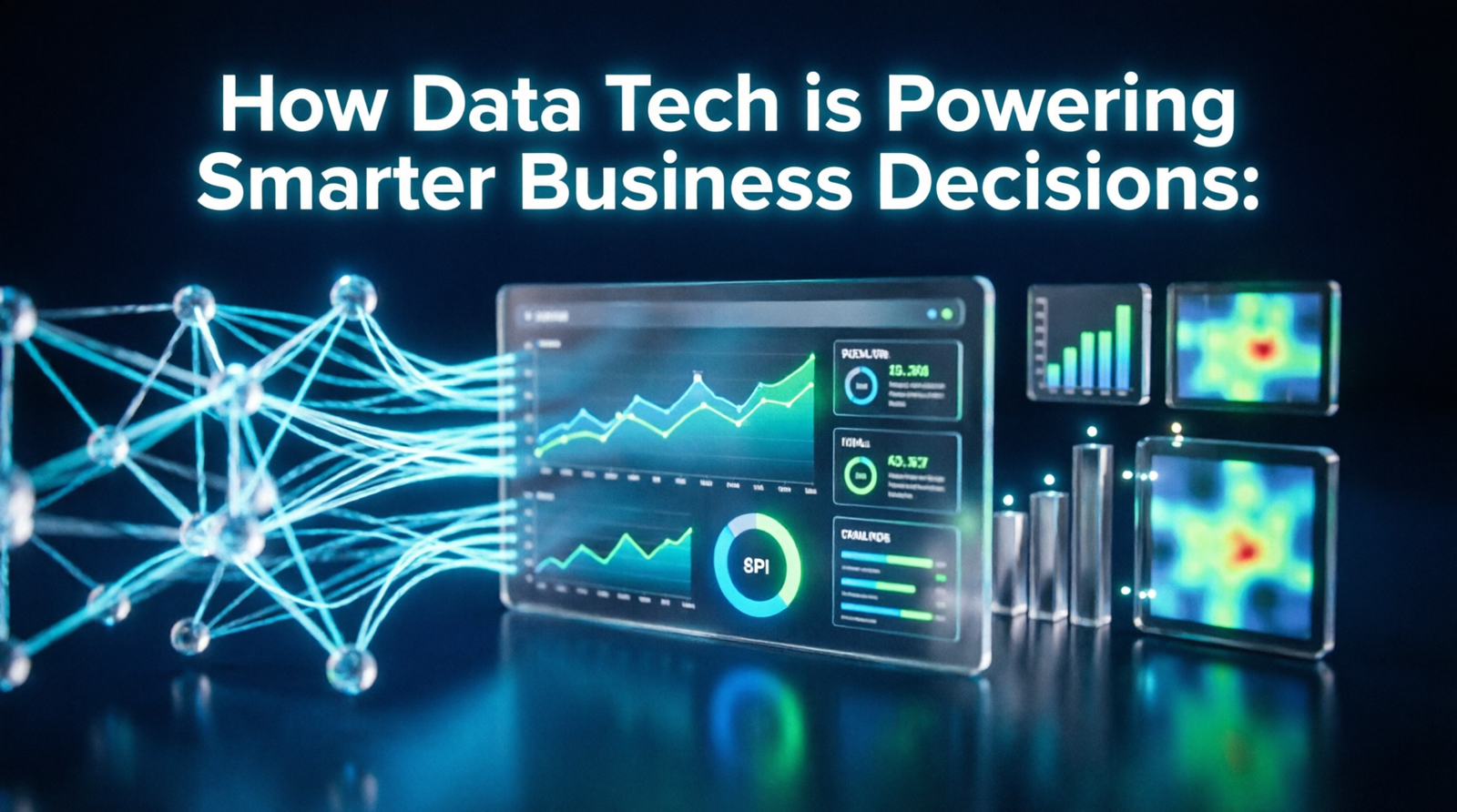
Modern businesses are rapidly shifting from intuition-based decision-making to data-driven strategies powered by advanced data technologies. Today, companies rely heavily on data tech systems to understand markets, customers, and internal operations. This transformation is driven by the explosion of digital data generated from websites, apps, transactions, and devices. With the help of Artificial Intelligence and advanced analytics tools, organizations can process this massive data in real time. The result is faster, more accurate, and more strategic business decisions. Data is no longer just a byproduct of operations—it has become a core business asset. Companies that effectively use data tech gain a significant competitive advantage in today’s fast-moving digital economy.
Key Points:
One of the biggest advantages of data tech is real-time analytics. Businesses no longer need to wait for monthly or quarterly reports to make decisions. Instead, they can analyze live data streams and respond instantly to changes. For example, e-commerce companies can track user behavior in real time and adjust pricing or promotions accordingly. Financial institutions can detect fraudulent transactions within seconds. This speed of decision-making allows companies to stay ahead of competitors. Real-time analytics also improves operational efficiency by identifying issues before they escalate. As a result, businesses become more agile and responsive to market dynamics.
Key Points:
Data tech is not only about understanding the present—it is also about predicting the future. By analyzing historical data patterns, businesses can forecast customer behavior, demand trends, and market shifts. This is where business intelligence systems and predictive analytics come into play. Companies use these insights to plan inventory, design marketing strategies, and optimize pricing models. For example, retail businesses can predict seasonal demand and adjust supply chains accordingly. This reduces waste and improves profitability. Predictive insights also help organizations identify risks early and take preventive action. In this way, data tech transforms decision-making from reactive to proactive.
Key Points:
Despite its benefits, implementing data tech comes with challenges. Data privacy and security are major concerns, especially with strict global regulations. Poor data quality can also lead to inaccurate insights and wrong decisions. Additionally, businesses often face difficulties integrating multiple data systems. Skilled professionals are required to manage and interpret complex datasets effectively. However, the future of data tech is promising. Advancements in AI, automation, and cloud computing are making data systems more powerful and accessible. As technology evolves, data-driven decision-making will become even more accurate, automated, and widespread across industries.
Key Points:
Data tech has become the foundation of modern business decision-making. By transforming raw information into meaningful insights, it enables organizations to operate more efficiently and strategically. With the support of technologies like Artificial Intelligence, businesses can analyze real-time data, predict future trends, and make smarter decisions. While challenges such as privacy and data complexity remain, the benefits far outweigh the risks.