Physical Address
304 North Cardinal St.
Dorchester Center, MA 02124
Physical Address
304 North Cardinal St.
Dorchester Center, MA 02124

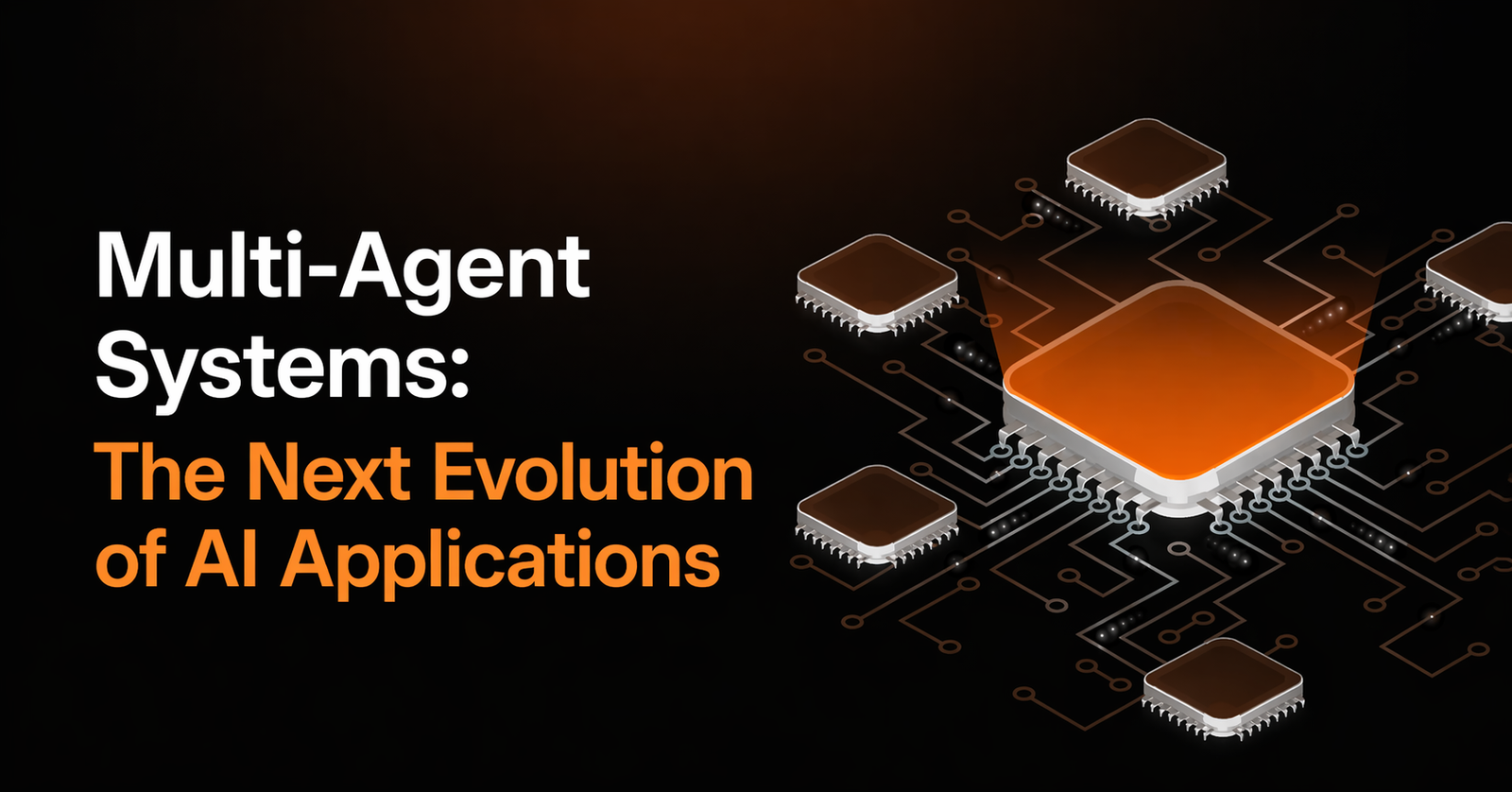
Artificial Intelligence is entering a new phase of innovation where single, isolated models are no longer sufficient to handle complex, real-world problems. As organizations demand more intelligent, adaptive, and scalable solutions, Multi-Agent Systems (MAS) are emerging as a powerful paradigm. Instead of relying on one centralized AI model, these systems consist of multiple intelligent agents that collaborate, compete, and coordinate to achieve shared or individual goals.
This shift represents a fundamental evolution in AI application design. Multi-agent systems mimic real-world environments more closely, where multiple entities interact dynamically, making them highly suitable for complex enterprise and industrial use cases.
What Are Multi-Agent Systems?
A Multi-Agent System is a collection of autonomous agents, each capable of perceiving its environment, making decisions, and taking actions. These agents can operate independently, but their true strength lies in their ability to communicate and collaborate with one another.
Each agent typically has:
Unlike traditional AI systems that rely on a single decision-making engine, MAS distributes intelligence across multiple agents. This decentralized approach improves flexibility, resilience, and scalability.
How Multi-Agent Systems Work
In a multi-agent environment, agents interact through defined communication protocols. They share information, negotiate outcomes, and coordinate actions to achieve objectives. These interactions can be cooperative, competitive, or a mix of both, depending on the system design.
For example, in a supply chain scenario, one agent may manage inventory, another handles logistics, and a third predicts demand. Together, they continuously exchange data and adjust their actions to optimize overall performance.
This collaborative behavior enables systems to:
Key Advantages of Multi-Agent Systems
Multi-agent systems offer several advantages over traditional AI architectures, especially in scenarios that require dynamic decision-making and scalability.
One major benefit is decentralization. Since there is no single controlling entity, the system becomes more resilient to failures. If one agent fails, others can continue operating, ensuring continuity.
Another advantage is scalability. New agents can be added without disrupting the entire system, making it easier to expand capabilities as business needs grow.
Additional benefits include:
These advantages make MAS particularly attractive for modern enterprise applications.
Real-World Applications
Multi-agent systems are already being explored and implemented across various industries. In finance, they can simulate market behaviors and optimize trading strategies. In healthcare, multiple agents can coordinate patient care, diagnostics, and treatment planning.
In autonomous vehicles, different agents manage navigation, obstacle detection, and communication with other vehicles, enabling safer and more efficient transportation systems. Similarly, smart cities use multi-agent systems to manage traffic flow, energy distribution, and public services.
Some notable use cases include:
These applications demonstrate the versatility and growing importance of multi-agent systems.
Challenges in Implementing Multi-Agent Systems
Despite their potential, multi-agent systems come with their own set of challenges. Designing effective communication and coordination mechanisms between agents can be complex. Poorly designed interactions may lead to conflicts, inefficiencies, or unexpected behaviors.
Another challenge is ensuring consistency and reliability across the system. Since agents operate independently, maintaining a unified system state can be difficult. Security is also a concern, as multiple interacting agents increase the attack surface.
Additionally, developing and managing such systems requires advanced expertise in distributed computing and AI, which may not be readily available in all organizations.
The Role of AI and Machine Learning
Machine learning plays a crucial role in enhancing the capabilities of multi-agent systems. Agents can learn from their environment and past interactions, improving their decision-making over time. Reinforcement learning, in particular, is widely used to train agents to optimize their actions based on rewards and penalties.
As agents become more intelligent, they can handle increasingly complex tasks and collaborate more effectively. This combination of learning and interaction is what sets multi-agent systems apart from traditional AI models.
The Future of Multi-Agent Systems
The future of AI applications is likely to be driven by ecosystems of intelligent agents working together seamlessly. As computing power increases and AI models become more sophisticated, multi-agent systems will become more practical and widespread.
Emerging trends such as autonomous enterprises, AI-driven workflows, and digital ecosystems are expected to rely heavily on multi-agent architectures. These systems will not only automate tasks but also make strategic decisions, adapt to changes, and continuously optimize performance.
In the coming years, multi-agent systems could redefine how organizations design software, manage operations, and deliver value to customers.
Conclusion
Multi-agent systems represent a significant step forward in the evolution of AI applications. By distributing intelligence across multiple autonomous agents, these systems offer greater flexibility, scalability, and resilience compared to traditional approaches.
While challenges such as complexity, coordination, and security must be addressed, the benefits far outweigh the limitations. As businesses continue to seek smarter and more adaptive solutions, multi-agent systems are poised to play a central role in the future of enterprise technology.
Ultimately, the transition from single AI models to collaborative agent ecosystems marks a new era—one where intelligent systems do not just operate independently but work together to solve some of the most complex challenges in the digital world.