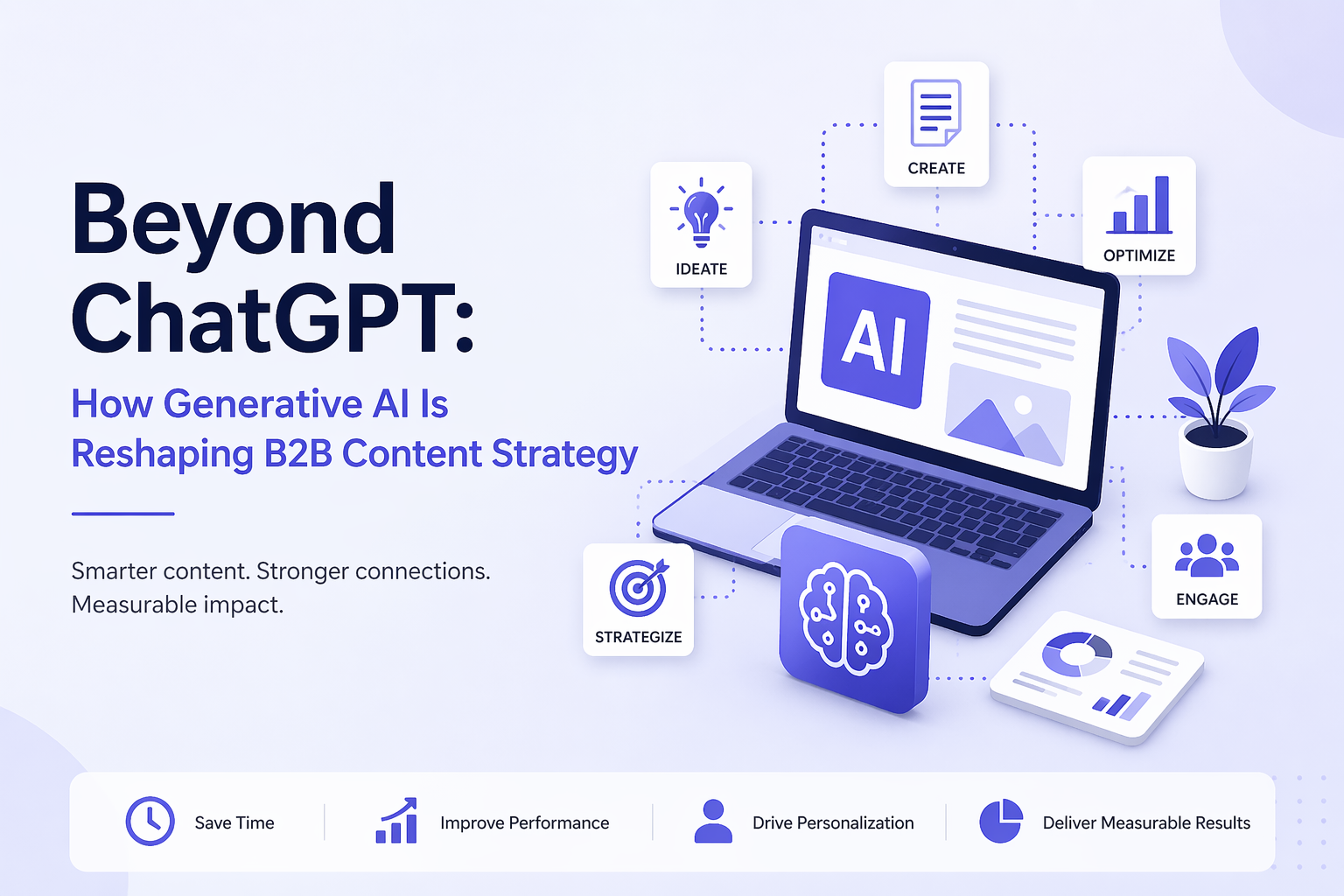
Generative AI has quickly moved from being a novelty to a core driver of modern B2B content strategy. While tools like ChatGPT introduced many organizations to the power of AI-generated text, the landscape has rapidly evolved beyond a single platform. Today, generative AI encompasses a wide ecosystem of technologies capable of producing text, images, videos, code, and even strategic insights. For B2B companies, this shift is fundamentally changing how content is planned, created, distributed, and optimized.
The Shift from Content Creation to Content Systems
Traditionally, B2B content marketing relied on manual workflows involving writers, designers, editors, and strategists. Each asset—whether a blog, whitepaper, or email campaign—required significant time and coordination. Generative AI is transforming this model by enabling the creation of scalable content systems rather than isolated pieces of content.
Instead of producing one blog post at a time, companies can now build interconnected content ecosystems. AI tools can generate multiple variations of content tailored to different audiences, industries, and stages of the buyer journey. This shift allows businesses to maintain consistency while dramatically increasing output.
Multimodal Content: Beyond Text-Based Marketing
One of the most significant advancements in generative AI is its ability to create multimodal content. B2B marketing is no longer limited to written formats—AI can now generate visuals, videos, voiceovers, and interactive experiences.
This evolution enables companies to diversify their content strategies without dramatically increasing costs or production time. For example, a single research report can be transformed into:
- Blog articles for SEO
- Short-form videos for social media
- Infographics for presentations
- Email campaigns targeting different segments
By repurposing content across formats, businesses can maximize reach and engagement while maintaining a cohesive message.
Personalization at Scale
Personalization has long been a goal in B2B marketing, but it was often limited by resources and data constraints. Generative AI is changing this by making it possible to create highly personalized content at scale.
AI systems can analyze customer data, behavior patterns, and preferences to generate tailored messaging for individual prospects or accounts. This is particularly valuable in account-based marketing (ABM), where relevance and precision are critical.
With generative AI, companies can:
- Customize email campaigns for specific industries or roles
- Generate dynamic website content based on user behavior
- Create personalized sales collateral for high-value accounts
The result is a more engaging and relevant experience for buyers, which can significantly improve conversion rates.
Enhancing Content Strategy with Data-Driven Insights
Generative AI is not just a content creation tool—it also plays a strategic role by providing insights and recommendations. Modern AI platforms can analyze large datasets to identify trending topics, content gaps, and performance patterns.
This allows marketers to move from intuition-based decisions to data-driven strategies. Instead of guessing what content will resonate, teams can rely on AI-generated insights to guide their efforts.
For instance, AI can help:
- Identify high-performing keywords and topics
- Suggest optimal content formats for specific audiences
- Predict the performance of content before publication
By integrating these insights into their workflows, B2B companies can create more effective and targeted content strategies.
Redefining Content Workflows and Team Roles
As generative AI becomes more integrated into content operations, it is reshaping the roles and responsibilities of marketing teams. Rather than replacing human creativity, AI is augmenting it by handling repetitive and time-consuming tasks.
Writers and marketers are increasingly focusing on strategy, storytelling, and brand voice, while AI handles drafting, editing, and optimization. This shift leads to faster production cycles and more efficient use of resources.
Typical workflow changes include:
- Reduced time spent on initial drafts
- Faster content iteration and testing
- Greater collaboration between teams using AI tools
Ultimately, the role of the marketer is evolving from content creator to content strategist and curator.
Challenges and Risks in Generative AI Adoption
Despite its advantages, generative AI introduces new challenges that B2B companies must address. One of the primary concerns is maintaining quality and authenticity. AI-generated content can sometimes lack depth or produce generic outputs if not properly guided.
Additionally, there are risks related to data privacy, intellectual property, and misinformation. Organizations must implement clear guidelines and governance frameworks to ensure responsible use of AI.
Some key considerations include:
- Ensuring human oversight and editorial control
- Maintaining brand voice and consistency
- Verifying accuracy of AI-generated content
- Complying with data protection regulations
Addressing these challenges is essential to building trust and credibility in AI-driven content strategies.
The Competitive Advantage of Early Adoption
Companies that embrace generative AI early are gaining a significant competitive advantage. They can produce more content, respond faster to market changes, and deliver more personalized experiences to their audiences.
However, the true advantage lies not just in using AI, but in how effectively it is integrated into the overall strategy. Organizations that combine AI capabilities with strong strategic thinking and creative execution are the ones that will stand out.
As the technology continues to evolve, staying ahead will require continuous experimentation, learning, and adaptation.
Conclusion
Generative AI is reshaping B2B content strategy in profound ways, moving beyond simple text generation to enable scalable, personalized, and data-driven content ecosystems. While tools like ChatGPT have played a key role in introducing this transformation, the future lies in a broader, more integrated approach to AI-powered content.
For B2B organizations, the opportunity is clear: leverage generative AI to enhance efficiency, improve personalization, and drive better results. At the same time, success will depend on maintaining a balance between automation and human creativity. Companies that embrace this balance will be best positioned to create meaningful, impactful content in an increasingly competitive digital landscape.