Sovereign AI: The Future of Enterprise Data Control and Compliance
Introduction –
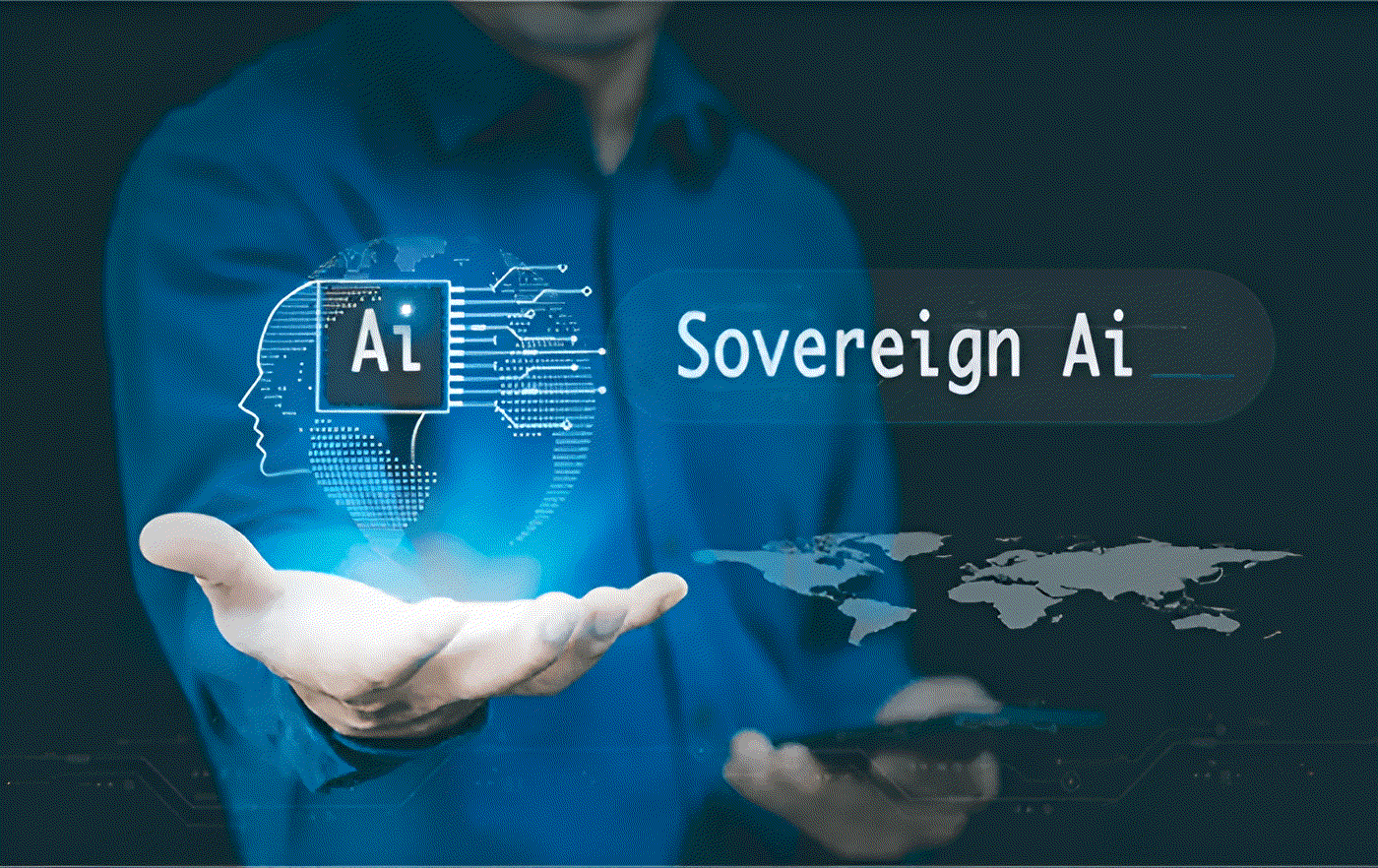
As enterprises accelerate their adoption of artificial intelligence, a new concept is emerging at the center of digital transformation: Sovereign AI. In simple terms, Sovereign AI refers to the ability of organizations and nations to build, deploy, and manage AI systems while maintaining full control over their data, infrastructure, and compliance boundaries.
In 2025 and beyond, this concept is becoming critical because AI is no longer just a productivity tool—it is a system that processes sensitive business, customer, and even national-level data. Sovereign AI is now shaping how enterprises think about security, governance, and regulatory alignment in an increasingly AI-driven world.
What is Sovereign AI?
Sovereign AI is the practice of ensuring that AI systems operate within defined legal, geographical, and organizational boundaries. It emphasizes data ownership, control, and regulatory compliance, ensuring that sensitive information does not leave approved jurisdictions or infrastructures without authorization.
Unlike traditional cloud-based AI models that may process data across multiple regions, Sovereign AI ensures that data remains under the control of the enterprise or country that owns it. This includes control over training data, model deployment, inference processing, and storage.
Why Sovereign AI is Becoming Essential in 2025 –
The rise of Sovereign AI is driven by several converging factors. First, global data protection laws are becoming stricter, requiring organizations to store and process data within specific geographic boundaries. Second, enterprises are increasingly concerned about data privacy, especially when using third-party AI models. Third, geopolitical concerns are influencing how countries and large organizations manage digital infrastructure.
As AI models become more powerful and data-hungry, the risk of exposing sensitive intellectual property, customer data, or regulated information has increased significantly. Sovereign AI addresses these risks by ensuring that AI operations remain fully transparent and controlled.
The Role of Data Sovereignty in AI Systems –
At the heart of Sovereign AI lies data sovereignty, which ensures that data is subject to the laws of the country where it is collected and stored. For enterprises, this means having strict control over where data is processed and who can access it.
In AI systems, this becomes even more important because models often require large-scale datasets for training and inference. Without proper governance, data may unintentionally cross borders or be used in ways that violate compliance rules. Sovereign AI frameworks prevent such risks by enforcing data localization and controlled access mechanisms.
How Sovereign AI Strengthens Compliance –
One of the most important benefits of Sovereign AI is its direct alignment with regulatory compliance requirements. Regulations such as GDPR and emerging AI-specific laws require strict controls over how personal and sensitive data is handled.
Sovereign AI helps enterprises comply with these regulations by ensuring:
- Data remains within approved jurisdictions
- AI models are auditable and transparent
- Access controls are strictly enforced
- Data usage is fully traceable across the AI lifecycle
This reduces the risk of legal penalties and strengthens trust between organizations, customers, and regulators.
Challenges in Implementing Sovereign AI —
Despite its benefits, implementing Sovereign AI is not without challenges. One of the biggest challenges is infrastructure complexity. Enterprises must build or adopt AI systems that support regional data control, which can increase operational costs.
Another challenge is performance trade-offs. Restricting data movement may limit access to global datasets, which can impact model accuracy and scalability. Additionally, integrating Sovereign AI principles into existing cloud environments requires careful redesign of data pipelines, governance frameworks, and security policies.
Sovereign AI vs Traditional AI Models –
| Aspect | Traditional AI | Sovereign AI |
|---|---|---|
| Data Control | Distributed across global cloud systems | Localized and tightly controlled |
| Compliance | Reactive compliance checks | Built-in compliance by design |
| Infrastructure | Cloud-first, multi-region | Region-specific or private infrastructure |
| Data Privacy | Shared responsibility model | Full ownership and control |
| Risk Exposure | Higher cross-border data risk | Reduced regulatory and privacy risk |
| Governance | External policies applied | Embedded governance layer |
The Future of Enterprise Sovereign AI –
In the coming years, Sovereign AI is expected to become a standard requirement for enterprises operating in regulated industries such as finance, healthcare, defense, and government services. Organizations will increasingly adopt hybrid AI architectures that combine cloud scalability with localized control mechanisms.
We are also likely to see the rise of sovereign AI ecosystems, where countries and enterprises build their own foundational models trained on localized datasets. This shift will redefine how AI innovation and data ownership are balanced globally.
Conclusion –
Sovereign AI represents a major evolution in how enterprises approach artificial intelligence. It is not just a technical architecture—it is a strategic framework for ensuring data control, regulatory compliance, and operational trust in an increasingly complex digital environment.
As AI becomes deeply integrated into enterprise decision-making, Sovereign AI will play a critical role in ensuring that innovation does not come at the cost of security or compliance. The future of AI is not just intelligent—it is sovereign, controlled, and compliant by design.