Why Digital Archaeology Matters in Modern Businesses
Every organisation gradually develops a technology environment shaped by its business decisions. A company might begin with a few applications and basic infrastructure, but years of expansion, acquisitions, department-level requirements, and technology upgrades can transform that environment into a complicated network of interconnected systems.
Digital Archaeology helps organisations examine this accumulated technology landscape and understand how individual systems evolved, why they still exist, and what business processes depend on them. Without this visibility, even experienced IT teams can struggle to identify which applications are essential, which integrations are outdated, and which systems are creating unnecessary operational complexity.
Consider an enterprise that has introduced several customer relationship management platforms over the years. Different departments may continue using separate applications because their workflows were developed independently. Although a newer platform has been implemented, the older systems might still exchange customer information with financial applications, reporting tools, or marketing platforms.

The organisation may believe it has modernised its technology environment, but its underlying architecture remains dependent on older infrastructure.
This is precisely where Digital Archaeology becomes valuable. It encourages businesses to look beyond the applications they currently use and investigate the technology relationships, historical decisions, and operational dependencies that exist underneath.
1. How Technology Sprawl Creates Hidden Business Complexity
One of the primary reasons Digital Archaeology has become relevant is the gradual expansion of enterprise technology environments.
Technology decisions are frequently made to solve immediate business problems rather than follow a comprehensive long-term architecture strategy. A department needs better reporting, so another analytics platform is introduced. Employees require improved collaboration, so a new communication application is purchased. An existing system cannot support a particular workflow, so an additional integration is developed.
Individually, these decisions may be reasonable. However, when departments make technology decisions independently, businesses gradually accumulate overlapping applications, disconnected databases, and complicated integrations.
Over time, technology sprawl can create several challenges:
- Application duplication: Multiple departments purchase different platforms to perform similar business functions.
- Data fragmentation: Important business information becomes distributed across disconnected applications.
- Integration complexity: Older systems continue exchanging information through connections that may not be properly documented.
- Process inconsistency: Different teams develop separate workflows for activities that should follow standard procedures.
- Maintenance overhead: IT departments spend additional time supporting applications that provide limited business value.
Digital Archaeology helps uncover these issues by examining how applications interact and whether their continued existence is justified.
For example, a manufacturing organisation might operate separate inventory management applications across regional facilities. Each system could have been introduced to address local requirements, but maintaining multiple platforms may create reporting inconsistencies and make consolidated inventory management difficult.
Rather than immediately replacing every application, IT leaders should first understand the business purpose, technical dependencies, and operational impact of each system.
The objective is to identify unnecessary complexity without disrupting processes that still deliver genuine business value.
2. The Disappearing Institutional Knowledge Behind Legacy Systems
Technology is not maintained by software alone. It also depends on the people who understand how systems were implemented, configured, integrated, and maintained.
One of the less visible challenges of Digital Archaeology is the gradual disappearance of institutional knowledge.
Employees who originally selected or implemented a platform often understand its technical limitations, configuration decisions, undocumented dependencies, and operational workarounds. However, when these individuals leave the organisation, much of that knowledge can disappear with them.
Technical documentation may be incomplete, historical implementation decisions may never have been recorded, and important operational instructions may exist only in the experience of a few employees.
New IT team members then inherit systems without understanding why they were configured in a particular way.
This creates several business risks:
- Knowledge concentration: Critical system knowledge remains with a small number of experienced employees.
- Operational dependency: Routine maintenance requires assistance from individuals who understand undocumented configurations.
- Troubleshooting delays: IT teams spend additional time investigating problems without reliable system documentation.
- Change management risks: Modifying one application may unexpectedly affect another business process.
- Employee transition challenges: New employees struggle to understand inherited infrastructure and application relationships.
Digital Archaeology provides a structured approach to recovering this missing knowledge.
IT teams can interview experienced employees, review historical project documentation, examine application configurations, and map dependencies between systems. This information should then become part of a central knowledge repository.
For instance, a financial services organisation might discover that an older reporting application still depends on a database maintained by an employee who left several years earlier. Although the application appears outdated, its reporting functionality remains important to business operations.
Understanding this dependency before making infrastructure changes can prevent unnecessary disruptions.
3. The Hidden Financial Cost of Maintaining Unknown Technology
The financial impact of technology complexity is not always immediately visible. Businesses may carefully track new software purchases while overlooking the ongoing costs associated with maintaining applications that have accumulated over several years.
Digital Archaeology helps organisations identify where technology expenditure is being consumed by outdated systems, redundant applications, and unnecessary maintenance activities.
These expenses can appear across different business budgets, making them difficult to identify through conventional financial reviews.
For example, an enterprise might continue paying for software licences that are no longer actively used. Another department may maintain a separate application because nobody has confirmed whether an existing enterprise platform can perform the same function.
Similarly, infrastructure teams might spend considerable time maintaining outdated environments instead of improving services that directly support business growth.
Common sources of hidden technology expenditure include:
- Unused or underutilised software subscriptions.
- Overlapping enterprise application licences.
- Legacy infrastructure maintenance contracts.
- Additional support requirements for outdated platforms.
- Repeated development work caused by disconnected systems.
- Employee productivity losses associated with inefficient workflows.
The opportunity cost is equally important.
Every hour spent maintaining unnecessary technology complexity is an hour that could have been invested in infrastructure modernisation, cybersecurity improvements, automation, or application development.
Digital Archaeology enables organisations to connect technology inventory information with actual business usage and operational value.
Instead of automatically renewing every existing software contract, IT and procurement teams can review whether each application remains necessary, whether alternative capabilities already exist, and whether the associated costs are justified.
The result is a more informed approach to enterprise technology spending.
4. Why Digital Transformation Can Fail Without Understanding Existing Systems
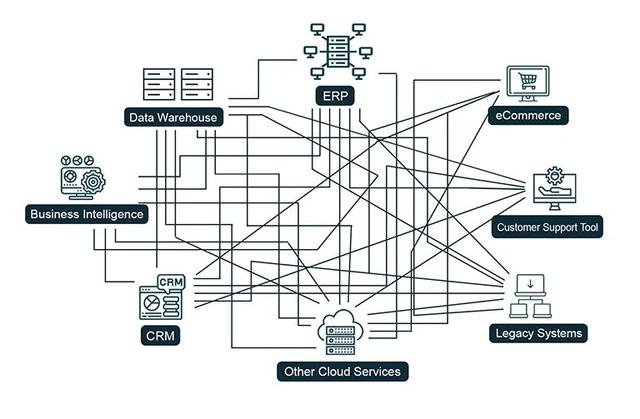
Organisations increasingly invest in artificial intelligence, automation, cloud computing, and advanced analytics to improve business performance.
However, introducing new technology does not automatically resolve existing operational problems.
In many cases, successful transformation depends on understanding the systems, processes, and information already supporting the organisation.
Digital Archaeology is particularly important because new technology initiatives frequently rely on existing applications and infrastructure.
Consider an organisation planning to introduce AI-powered business intelligence. The initiative may depend on information collected from CRM platforms, financial applications, customer support systems, and operational databases.
If these sources contain inconsistent information or lack reliable integration mechanisms, the new analytics solution may produce incomplete or misleading insights.
Similarly, automating an inefficient business process does not necessarily make that process more effective. It may simply allow existing inefficiencies to occur faster.
Before introducing another technology layer, organisations should investigate:
- Whether existing applications provide reliable and accessible data.
- Whether critical business processes are properly documented.
- Whether application integrations are stable and understood.
- Whether information is consistent across departments.
- Whether existing infrastructure can support the proposed solution.
- Whether legacy platforms introduce technical or security limitations.
Digital Archaeology encourages organisations to establish a clear understanding of their technology environment before making additional investments.
For example, a retail enterprise introducing automated inventory forecasting should first understand how product information, warehouse records, purchasing applications, and sales systems exchange data.
Without this foundation, even sophisticated automation may struggle to deliver meaningful operational improvements.
The most effective digital transformation initiatives do not simply introduce new capabilities. They improve the overall technology environment on which those capabilities depend.
5. Security Risks Hidden Inside Legacy Technology Environments
Technology complexity is not only an operational and financial concern. It can also create security vulnerabilities that remain difficult to identify.
Older applications may no longer receive regular security updates, forgotten user accounts may retain access to business information, and undocumented integrations may introduce risks that are not covered by existing monitoring processes.
Digital Archaeology helps organisations discover these overlooked technology assets and understand how they interact with sensitive business information.
An application that appears inactive might still exchange information with another platform. An outdated database might contain customer records that require protection. A forgotten service account might retain permissions long after its original purpose has disappeared.
These situations demonstrate why businesses need continuous visibility into their digital environments.
Important areas to examine include:
- Software inventory: Identify active, inactive, unsupported, and duplicated applications.
- Access permissions: Review user accounts, administrative privileges, and service accounts.
- Integration security: Understand how applications exchange information and authenticate connections.
- Data management: Identify where sensitive information is stored, transferred, and processed.
- System maintenance: Review patching practices, vendor support, and infrastructure dependencies.
Digital Archaeology also supports stronger business continuity planning.
When IT teams understand which applications support critical business activities, they can prioritise recovery requirements and identify dependencies that could affect service availability.
For example, an enterprise might discover that an older application supports a critical order-processing workflow, even though employees rarely interact with it directly.
Removing or modifying that application without understanding its dependencies could disrupt the wider business process.
A comprehensive technology assessment helps prevent such decisions and enables organisations to address risks through informed planning.
6. Building a Practical Digital Archaeology Strategy
Understanding hidden technology complexity requires a structured approach. Organisations do not necessarily need to replace every legacy application or launch an expensive transformation programme immediately.
The first step is to establish an accurate picture of the current technology environment.
A practical Digital Archaeology strategy should combine technical discovery, business stakeholder involvement, application assessment, and ongoing governance.
Step 1: Create a Complete Technology Inventory
Begin by identifying the applications, infrastructure components, databases, cloud services, integrations, and platforms currently used across the organisation.
Do not limit the assessment to officially approved IT systems. Department-level applications, locally maintained tools, and third-party services may also support important business activities.
The inventory should capture:
- Application and system names.
- Business owners and technical owners.
- Primary business functions.
- Hosting environments and technology platforms.
- Vendor support and maintenance information.
- Integration relationships and data dependencies.
- Current usage and business importance.
Step 2: Map System Dependencies
A technology inventory explains what exists, but dependency mapping explains how everything works together.
IT teams should identify which applications exchange information, which databases support critical processes, and which infrastructure components depend on other systems.
Application dependency mapping is particularly useful when organisations plan infrastructure upgrades, cloud migrations, or legacy application replacements.
It helps identify potential downstream impacts before changes are implemented.
Step 3: Involve Business Departments
Technology teams cannot always determine the business importance of an application through technical information alone.
An application that appears outdated may still support a critical financial, operational, or regulatory workflow.
IT departments should work with finance, HR, operations, sales, customer service, and other relevant business teams to understand how technology supports everyday activities.
This collaboration helps distinguish genuinely redundant systems from platforms that remain operationally essential.
Step 4: Assess Business Value and Technical Risk
Once systems and dependencies have been identified, organisations should evaluate their business relevance and technical condition.
A useful assessment should consider:
- Business criticality.
- Application usage and adoption.
- Maintenance and licensing costs.
- Security and compliance requirements.
- Vendor support availability.
- Integration complexity.
- Modernisation or replacement requirements.
This assessment allows IT leaders to prioritise systems based on business impact rather than age alone.
Step 5: Document and Establish Clear Ownership
System documentation should not be treated as a one-time project deliverable.
Every important application should have clearly assigned ownership, updated technical documentation, and an identified process for managing changes.
Documentation should explain the system’s purpose, dependencies, access requirements, integrations, maintenance responsibilities, and recovery considerations.
This reduces reliance on individual employees and makes technology management more sustainable.
Step 6: Review the Technology Environment Continuously
Digital Archaeology should become an ongoing governance activity rather than an occasional technology audit.
Organisations should periodically review their application inventory, identify newly introduced systems, assess changing dependencies, and remove unnecessary technology where appropriate.
This creates a more transparent and manageable digital environment.
7. Turning Digital Archaeology into a Long-Term Enterprise Advantage
The real value of Digital Archaeology is not simply discovering old software. It is helping organisations make better decisions about their future technology investments.
Once businesses understand their existing environments, they can prioritise modernisation initiatives more effectively and reduce the likelihood of introducing unnecessary complexity.
For enterprise IT leaders, this creates opportunities across several important areas.
Better IT investment decisions: Technology leaders can evaluate new investments against existing capabilities and avoid unnecessary application duplication.
Improved operational resilience: Understanding system dependencies helps organisations anticipate the impact of infrastructure changes and reduce disruption risks.
Stronger technology governance: Clear application ownership and documentation improve accountability across IT and business departments.
More effective cloud modernisation: Dependency mapping helps identify which workloads are suitable for migration, modernisation, or retirement.
Improved automation readiness: Businesses can identify process inefficiencies and data quality issues before implementing automation initiatives.
More informed cybersecurity planning: A complete understanding of applications, integrations, and access permissions improves visibility into potential security exposures.
Digital Archaeology also changes how organisations approach technology procurement.
Instead of automatically purchasing another platform whenever a department identifies a requirement, businesses can first examine whether existing systems already provide the necessary capabilities.
This encourages a more integrated approach to enterprise architecture and helps ensure that technology investments contribute to long-term business objectives.
Ultimately, organisations that understand their digital history are better equipped to shape their digital future.
Conclusion
Digital Archaeology highlights a challenge that many growing organisations overlook: technology complexity does not disappear simply because newer systems are introduced. Older applications, undocumented integrations, forgotten configurations, and historical technology decisions can continue influencing business operations long after their original purpose has changed.
The consequences extend beyond IT maintenance. Hidden dependencies can increase operational costs, create security vulnerabilities, complicate digital transformation, and make organisations dependent on knowledge that exists only within a small group of employees.
Addressing this challenge requires more than replacing outdated software. Businesses need a clear understanding of their technology assets, system relationships, operational dependencies, and institutional knowledge. Regular technology assessments, application documentation, dependency mapping, and clear ownership provide the foundation for a more manageable digital environment.
Digital Archaeology should therefore become an important part of enterprise IT strategy. By understanding what already exists, organisations can make smarter investment decisions, improve infrastructure resilience, strengthen security, and introduce new technologies with greater confidence.
Because the biggest technology risk in an organisation is not always the system that fails; sometimes, it is the system nobody remembers building but everyone still depends on.
Frequently Asked Questions
1. What is Digital Archaeology in IT?
Digital Archaeology is the process of examining an organisation’s existing technology environment to identify legacy applications, undocumented integrations, hidden system dependencies, historical configurations, and outdated processes. It helps businesses understand how their digital infrastructure evolved and what continues to support their operations.
2. Why is Digital Archaeology important for businesses?
Digital Archaeology helps organisations uncover technology complexity that can affect operational efficiency, cybersecurity, IT expenditure, and digital transformation. It provides visibility into existing systems and helps IT leaders make informed decisions about application modernisation, technology investments, and infrastructure management.
3. How does Digital Archaeology help manage legacy IT systems?
It helps identify legacy applications, understand their business purpose, document their dependencies, assess their technical condition, and determine whether they should be maintained, modernised, replaced, or retired. This reduces the risks associated with making changes to systems that support important business operations.
4. What are the biggest risks of undocumented business systems?
Undocumented systems can create operational dependencies, security vulnerabilities, unexpected integration failures, troubleshooting delays, and knowledge gaps. Organisations may also struggle to identify the impact of infrastructure changes when relationships between applications are not properly understood.
5. How does Digital Archaeology support digital transformation?
Digital Archaeology provides visibility into the existing technology environment before organisations introduce new platforms, automation, AI, or cloud services. Understanding existing applications, data quality, and system dependencies helps businesses avoid building new solutions on top of inefficient processes or unreliable infrastructure.
6. What is the difference between Digital Archaeology and an IT audit?
An IT audit generally evaluates technology environments against defined operational, security, financial, or compliance requirements. Digital Archaeology focuses more specifically on uncovering historical technology decisions, undocumented systems, application relationships, and dependencies that may have developed over time. Both approaches can complement each other.
7. How can businesses identify hidden software and applications?
Businesses can combine software asset discovery, endpoint inventory tools, cloud environment reviews, application usage analysis, network and integration assessments, procurement records, and departmental interviews. These activities help identify officially managed applications as well as less visible technology used across business teams.
8. Can Digital Archaeology reduce IT costs?
Yes. It can help identify unused software licences, duplicated applications, unnecessary integrations, and outdated systems that require disproportionate maintenance effort. This information allows organisations to evaluate technology expenditure and prioritise cost optimisation opportunities without unnecessarily disrupting critical operations.
9. How often should organisations review their technology environment?
Technology discovery and documentation should be ongoing activities. Organisations should establish periodic reviews based on their technology governance requirements, business changes, security needs, and infrastructure complexity. Major changes such as acquisitions, cloud migrations, application replacements, and infrastructure upgrades should also trigger dependency reviews.
10. Does Digital Archaeology mean replacing all legacy systems?
No. The objective is to understand existing systems and determine their business value, technical condition, and operational importance. Some legacy applications may continue delivering essential functionality. Depending on the assessment, businesses may choose to retain, modernise, replace, consolidate, or gradually retire individual systems.