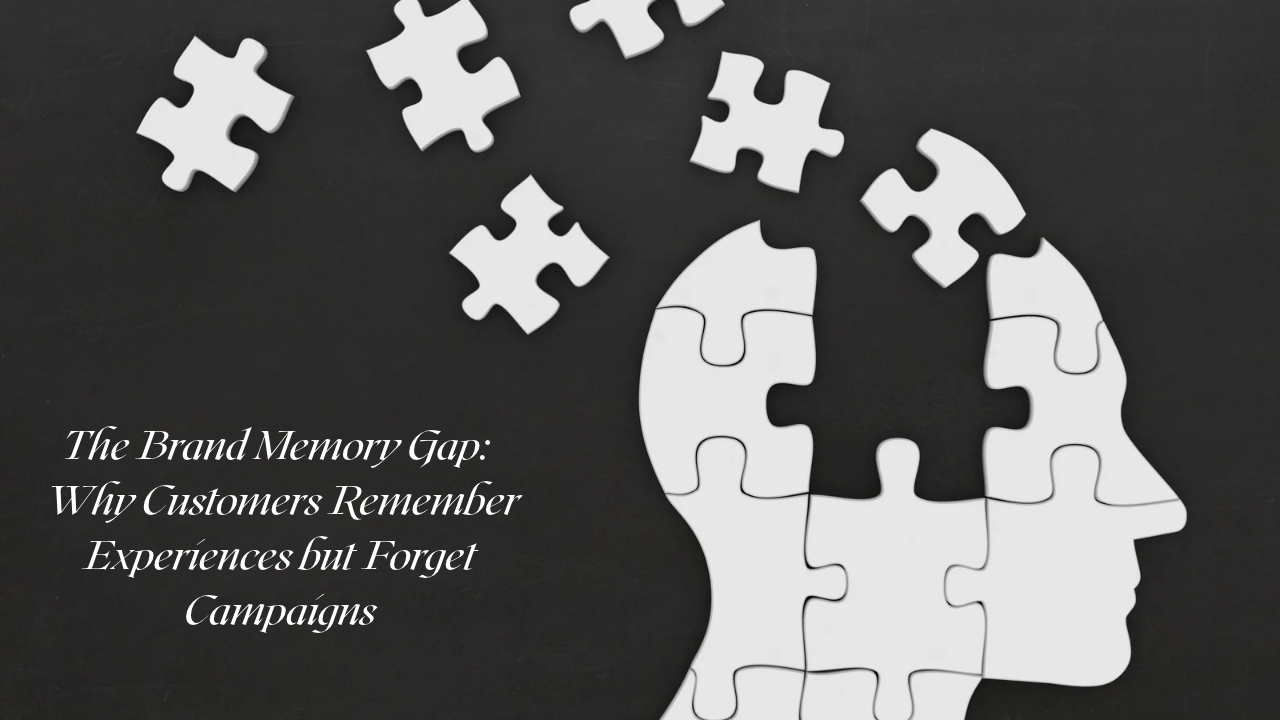
The Brand Memory Gap highlights one of the biggest challenges facing modern marketing: the difference between capturing customer attention and creating a lasting brand impression. Businesses invest heavily in advertising campaigns, social media promotions, email marketing, influencer collaborations, and creative storytelling. While these activities can generate impressions, clicks, engagement, and conversions, they do not necessarily ensure that customers will remember the brand when they need its products or services.
A customer might watch an impressive advertisement, appreciate its creativity, or interact with a promotional post without remembering the company behind it a few days later. This disconnect between temporary engagement and long-term brand recognition is known as the Brand Memory Gap. In an increasingly competitive digital environment, where audiences encounter countless marketing messages, businesses are competing not just for visibility but also for a meaningful place in the customer’s mind.
For B2B organisations, the Brand Memory Gap becomes even more significant because purchasing decisions often involve extended research, multiple stakeholders, and considerable evaluation. A potential buyer might discover a company through a LinkedIn post, read its industry insights several weeks later, attend a webinar, and eventually explore its services when a business requirement emerges. The question is whether those separate interactions have created enough familiarity and trust for the company to be remembered.
Closing the Brand Memory Gap requires businesses to move beyond individual campaign performance and focus on consistent, meaningful brand experiences.
1. Understanding the Brand Memory Gap in Modern Marketing
The Brand Memory Gap represents the difference between how frequently a business appears in front of its audience and how effectively that audience remembers and recognises the brand. Although marketing visibility is important, repeated exposure does not automatically translate into familiarity, credibility, or preference.
Many organisations evaluate marketing success through measurable campaign indicators such as impressions, click-through rates, website traffic, social media engagement, and lead generation. These metrics provide valuable insights into campaign performance, but they offer only a partial understanding of how customers perceive and remember a business.
For example, an enterprise software company might launch a LinkedIn campaign promoting its cloud migration services. The campaign could attract significant engagement, but if potential buyers cannot associate the content with the company or remember what makes its services different, the campaign may have limited long-term brand-building value.
The distinction becomes clearer when businesses separate immediate marketing outcomes from lasting brand associations:
- Attention: Does the campaign successfully capture the audience’s interest?
- Recognition: Can customers identify the brand when they encounter its communication again?
- Recall: Can customers remember the company without seeing its logo or advertisement?
- Association: Do customers connect the brand with a particular expertise, value, or business solution?
- Trust: Do previous interactions create confidence in the company’s capabilities?
These elements contribute to how customers develop familiarity with a brand. Organisations that focus exclusively on immediate engagement risk overlooking the deeper relationships that influence future purchasing decisions. Understanding these factors is the first step towards addressing the Brand Memory Gap.
2. Why Short-Term Campaign Performance Often Comes at the Expense of Brand Recognition
One of the biggest contributors to the Brand Memory Gap is the growing emphasis on short-term marketing performance. Marketing teams are frequently expected to demonstrate immediate results, which encourages organisations to prioritise promotional offers, trending content formats, paid advertising, and campaign-specific engagement.
Although these approaches can support lead generation and demand generation, they can also create fragmented brand communication when every campaign follows a different direction.
Consider a B2B technology company that regularly changes its messaging to align with industry trends. One month, it promotes artificial intelligence solutions. The following month, its communication focuses on cybersecurity, followed by cloud infrastructure and digital transformation.
These topics may all be relevant to its services, but without a consistent underlying brand message, audiences may struggle to understand what the company actually represents and why they should remember it. This inconsistency can widen the Brand Memory Gap, even when individual campaigns perform well.
This challenge is particularly important in B2B marketing because the buying journey rarely follows a direct path.
A potential customer might:
- Discover a company’s services through a digital advertisement.
- Read an educational article several weeks later.
- Attend an industry webinar or virtual event.
- Receive a follow-up email from the sales team.
- Revisit the company when a relevant business requirement arises.
If every interaction feels disconnected, the organisation loses an opportunity to build familiarity throughout the buying journey.
What businesses should do differently:
Rather than evaluating every campaign as an independent activity, marketing teams should establish a consistent communication framework. Each campaign should reinforce the organisation’s core positioning, expertise, and value proposition while adapting its message to the audience, platform, and stage of the buying journey.
This allows individual campaigns to contribute to a broader brand-building strategy rather than functioning as isolated promotional activities. It also helps businesses reduce the Brand Memory Gap by creating a recognisable identity across multiple marketing channels.
3. Customer Experiences Matter More Than Individual Marketing Messages
Customers rarely form their complete perception of a business through advertising alone. Their understanding of a brand develops through multiple interactions, including website visits, sales conversations, customer support experiences, product demonstrations, service delivery, and ongoing communication.
A marketing campaign might create a positive first impression, but the actual customer experience determines whether that impression becomes stronger or weaker over time. This is an important consideration when addressing the Brand Memory Gap because customers remember experiences more meaningfully when a company’s actions consistently support its marketing promises.
For instance, an enterprise technology provider may advertise its ability to simplify complex IT operations. However, if its website is difficult to navigate, sales representatives provide inconsistent information, or customer support takes too long to resolve issues, the overall experience may contradict the original promise.
On the other hand, a company that consistently delivers helpful information, communicates clearly, and provides reliable service can build a memorable reputation even without exceptionally creative advertising.
This is why brand building should not be treated as the responsibility of the marketing department alone. It requires alignment across different business functions.
Important Customer Touchpoints That Influence Brand Perception
Several interactions can contribute to how customers remember an organisation:
- Website experience: Navigation, content quality, accessibility, and clarity of information influence the initial impression.
- Sales communication: Professional conversations and relevant recommendations help establish credibility.
- Customer support: Responsive assistance and effective problem-solving reinforce customer confidence.
- Product demonstrations: Clear explanations of capabilities help customers connect the brand with practical business value.
- Email communication: Consistent messaging and relevant follow-ups maintain familiarity throughout the relationship.
- Service delivery: Meeting expectations strengthens the connection between brand promises and actual experiences.
When these touchpoints communicate a consistent message, customers begin recognising the organisation through its behaviour, expertise, and service quality rather than relying exclusively on visual identity. This consistency is essential for reducing the Brand Memory Gap and developing stronger customer relationships.
4. Visual Recognition Is Not the Same as Meaningful Brand Recall
Many businesses invest considerable resources in developing attractive visual identities. Logos, colour combinations, typography, website layouts, and creative advertising formats all contribute to brand recognition.
However, being visually recognisable does not necessarily mean being meaningfully memorable. This distinction is central to understanding the Brand Memory Gap.
A customer might recognise a company’s logo but still struggle to explain what the organisation does, which problems it solves, or why it is different from competitors.
A strong brand requires more than visual consistency. It needs a clear association with a particular value, capability, experience, or business outcome.
For example:
- A cybersecurity company might want customers to associate its brand with proactive risk management and digital resilience.
- A cloud consulting firm might aim to become recognised for simplifying complex cloud transformations.
- An enterprise automation provider might build its reputation around improving operational efficiency and reducing repetitive processes.
- A data analytics company might want to be associated with turning complex information into practical business decisions.
These associations develop through repeated and meaningful communication.
Building a Distinctive Brand Position
To improve brand recall and overcome the Brand Memory Gap, organisations should first identify what they want their target audience to remember.
Marketing teams can approach this by asking three important questions:
- What specific business problem does our organisation help customers solve?
- What expertise or value should customers associate with our brand?
- What makes our approach different from other companies offering similar solutions?
The answers should influence website messaging, social media communication, email campaigns, thought leadership content, sales presentations, and customer interactions.
For example, if a technology company wants to become known for simplifying enterprise IT operations, that positioning should appear consistently across its educational content, service descriptions, case studies, and customer communication.
The objective is not to repeat identical marketing messages everywhere. It is to reinforce the same underlying brand association through different forms of useful communication.
5. Why More Marketing Technology Does Not Automatically Improve Brand Recall
Modern marketing technology has transformed how organisations understand audiences and manage customer interactions. Businesses can now use customer relationship management platforms, marketing automation tools, customer data platforms, analytics solutions, and artificial intelligence to personalise communication and optimise campaigns.
These technologies help organisations understand customer behaviour, identify engagement patterns, automate follow-ups, and deliver more relevant experiences.
However, access to more data does not automatically solve the Brand Memory Gap.
A marketing team might know how long a visitor spends watching a promotional video, which advertisement generates the most clicks, or which email receives the highest response rate. Yet these insights do not necessarily reveal whether customers remember the brand or understand its market positioning.
This creates an important distinction between measuring customer activity and understanding customer perception.
Moving Beyond Traditional Marketing Metrics
Organisations should complement conventional performance indicators with measures that provide insights into brand familiarity and customer associations.
Some useful approaches include:
- Brand recall surveys: Ask customers whether they can remember the company without being shown its name or logo.
- Brand recognition studies: Evaluate whether audiences can identify the organisation when presented with its visual identity or communication.
- Customer feedback: Understand which qualities, services, and experiences customers associate with the business.
- Direct traffic trends: Examine changes in visitors who access the website directly, while recognising that this metric alone does not establish brand recall.
- Branded search performance: Monitor how audiences search for the organisation by name or other brand-specific terms.
- Customer retention insights: Evaluate whether consistent experiences contribute to ongoing customer relationships.
These indicators should be considered alongside impressions, engagement, conversions, and lead generation rather than replacing them.
Using Technology to Create Connected Experiences
Technology becomes more valuable when it helps businesses connect different customer interactions.
For example, integrating CRM and marketing automation platforms can help marketing and sales teams understand previous engagements and deliver more relevant communication. Customer data platforms can help consolidate information from supported channels, while analytics tools can identify patterns in customer behaviour.
The objective should be to make every interaction more relevant and consistent, not simply increase the number of messages reaching the same audience. When technology supports a connected customer journey, it can help organisations address the Brand Memory Gap more effectively.
6. Seven Practical Ways to Turn Marketing Campaigns into Lasting Brand Recognition
Closing the Brand Memory Gap requires a more deliberate approach to brand communication. Businesses need to create experiences that remain recognisable even when individual advertisements, promotional campaigns, and social media posts are no longer visible.
The following strategies can help B2B organisations strengthen brand recall and build more meaningful customer associations.
1. Establish a Clear and Consistent Brand Message
Every organisation should have a clearly defined message that communicates what it does, whom it serves, and what value it delivers.
This message should remain consistent across marketing channels, even when the format or campaign objective changes.
For example, an enterprise software company may focus on helping businesses improve operational efficiency. Its blogs, webinars, email campaigns, and sales presentations should reinforce this central value proposition.
A consistent message makes it easier for audiences to recognise the company and associate it with a specific business outcome.
2. Invest in Educational and Thought Leadership Content
Useful content creates opportunities for customers to associate a company with expertise and industry knowledge.
Instead of relying exclusively on promotional messages, B2B organisations should publish practical resources that address real business challenges.
Examples include:
- Technical guides and industry research.
- Educational webinars and expert discussions.
- Practical implementation insights.
- Technology comparisons and evaluation frameworks.
- Case studies explaining business challenges and solutions.
Over time, consistent educational communication can help position a business as a valuable source of information within its industry. This approach also helps reduce the Brand Memory Gap by connecting the organisation’s name with useful knowledge.
3. Create Consistent Experiences Across Every Customer Touchpoint
Brand recognition becomes stronger when customers experience the same underlying values across different interactions.
Marketing, sales, customer support, and service delivery teams should understand the organisation’s positioning and communicate it consistently.
This does not mean every department needs to use identical language. Instead, their interactions should reinforce the same expectations and demonstrate the same commitment to customers.
4. Focus on Meaningful Customer Engagement Rather Than Frequency
Sending more emails, publishing more posts, or increasing advertising frequency does not automatically improve brand recall.
Businesses should prioritise communication that provides genuine value.
For example, a cloud services provider could share practical insights about infrastructure modernisation rather than repeatedly promoting its service catalogue.
Relevant and useful communication gives customers a stronger reason to pay attention and engage with the brand. Quality interactions are more valuable than simply increasing exposure when addressing the Brand Memory Gap.
5. Connect Campaigns Across the Entire Buying Journey
B2B purchasing decisions often involve multiple interactions over an extended period.
Marketing teams should design campaigns that complement one another rather than treating every initiative as an isolated activity.
A webinar, for example, could be supported by an educational blog, an email invitation, a post-event resource, and relevant follow-up communication.
Each interaction should build on the previous one while maintaining a consistent brand message. This connected approach helps create familiarity throughout the buying journey.
6. Use Customer Feedback to Understand Brand Associations
Businesses should not assume they know what customers remember about them.
Customer interviews, feedback forms, brand surveys, and sales conversations can reveal how audiences perceive the organisation.
These insights can help marketing teams identify whether the intended brand positioning matches actual customer perceptions.
If a company wants to be recognised for innovation but customers primarily associate it with affordability, there may be a disconnect between its communication strategy and market perception.
Understanding these differences allows organisations to make informed changes to their messaging and customer experience.
7. Align Marketing Promises with Actual Business Experiences
The strongest brand associations develop when businesses consistently deliver what they communicate.
If a company promotes reliability, its service delivery should reflect that commitment. If it highlights customer-centricity, its support processes should demonstrate it.
This alignment between communication and experience is particularly important in enterprise environments, where customer relationships often extend beyond the initial purchase.
When businesses deliver on their promises, customers have stronger reasons to remember, trust, and recommend them. This is one of the most effective ways to address the Brand Memory Gap over the long term.
7. The Role of Brand Memory in Long-Term B2B Growth
Brand memory is not simply a marketing consideration. It can influence how organisations are evaluated during future purchasing decisions.
In B2B markets, customers may not have an immediate requirement for every solution they encounter. However, they may remember companies that consistently provide useful insights, demonstrate relevant expertise, and create positive experiences.
When a business requirement eventually emerges, these previous associations can help bring familiar brands into consideration.
For example, an organisation evaluating cybersecurity providers may have encountered several companies through industry articles, webinars, LinkedIn discussions, and professional events.
Even if it did not engage with those providers immediately, its previous experiences may influence which companies it chooses to research further.
This is one reason long-term brand-building activities should complement lead generation and demand generation programmes. Reducing the Brand Memory Gap can help businesses remain relevant even when potential buyers are not actively searching for a solution.
A strong brand presence can support several business objectives:
- Improved consideration: Familiarity can make a company easier to recall when evaluating potential providers.
- Stronger credibility: Consistent expertise and useful communication can contribute to a positive perception.
- More effective sales conversations: Prospects who already understand a company’s positioning may require less introductory explanation.
- Customer relationship development: Consistent experiences help reinforce the organisation’s value beyond the initial transaction.
- Market differentiation: Clear and repeated brand associations help businesses communicate what distinguishes them from competitors.
These outcomes are not guaranteed by brand visibility alone. They depend on the relevance, consistency, and quality of the experiences an organisation delivers over time.
8. Measuring Whether Your Brand Is Becoming More Memorable
Businesses cannot improve brand recall effectively without understanding how customers currently perceive them.
Traditional marketing dashboards provide useful performance information, but organisations should also develop ways to evaluate brand recognition, customer associations, and experience consistency.
A practical approach is to combine quantitative indicators with qualitative feedback.
For example, marketing teams can monitor branded search activity, conduct periodic brand recall surveys, analyse customer feedback, and evaluate how consistently the organisation is represented across different communication channels.
A simple brand measurement framework can include the following areas:
| Measurement Area | What to Evaluate | Why It Matters |
|---|---|---|
| Brand awareness | Audience familiarity with the company | Understands overall market visibility |
| Brand recall | Ability to remember the company without prompts | Evaluates spontaneous brand memory |
| Brand recognition | Ability to identify the company when prompted | Measures familiarity with brand identity |
| Brand association | Qualities and expertise connected with the company | Reveals how the market perceives its positioning |
| Customer experience | Consistency across interactions | Identifies gaps between promises and delivery |
| Brand consideration | Whether the company enters relevant buying discussions | Connects brand perception with purchasing behaviour |
These measurements should be reviewed periodically rather than treated as one-time exercises.
Over time, the insights can help organisations identify which messages resonate, which experiences strengthen brand associations, and where inconsistencies need to be addressed. Tracking these indicators also helps businesses determine whether their efforts to close the Brand Memory Gap are producing meaningful improvements.
Conclusion
The Brand Memory Gap highlights an important reality of modern marketing: capturing attention is only the beginning of building a meaningful relationship with customers. A campaign may generate thousands of impressions, attract engagement, and deliver short-term conversions, but its long-term value depends on what customers remember after the campaign ends.
For B2B organisations, closing this gap requires a shift from campaign-focused thinking towards experience-driven brand building. Consistent communication, valuable thought leadership, meaningful customer interactions, clear positioning, and reliable service delivery all contribute to how customers recognise and remember a business.
Technology can help organisations understand customer behaviour, personalise interactions, and connect marketing activities across channels. However, the real opportunity lies in using these capabilities to create experiences that reinforce a clear and distinctive brand identity.
Ultimately, customers do not need to remember every advertisement, email, webinar, or social media post a company publishes. They need to remember what the company stands for, the problems it helps solve, and the value it consistently delivers.
The most successful brands are not necessarily the ones customers see most often. They are the ones customers remember when it matters most.