Introduction to Deepfake Technology
Artificial Intelligence has transformed digital media in ways that were unimaginable a few years ago. One of the most advanced and controversial innovations is deepfake technology. Deepfakes are AI-generated images, videos, or audio recordings that can realistically imitate real people. Using deep learning algorithms and neural networks, AI systems can replace faces, clone voices, and create highly realistic digital content. Initially, deepfake technology was developed for research and entertainment purposes, but it has rapidly expanded into multiple industries. Today, businesses, filmmakers, marketers, and social media creators are exploring its potential. However, alongside innovation, deepfakes have also introduced serious ethical, security, and social risks. In 2026, deepfake technology has become a major global concern because fake videos and voice recordings can easily spread misinformation, manipulate public opinion, and damage reputations. As AI tools become more powerful and accessible, understanding both the opportunities and dangers of deepfakes is becoming increasingly important for individuals, organizations, and governments worldwide.
Key Highlights
- Deepfakes use AI and deep learning
- Can generate fake videos and voices
- Growing rapidly across industries
- Useful for entertainment and business
- Raises serious ethical concerns
Opportunities and Positive Uses of Deepfake Technology
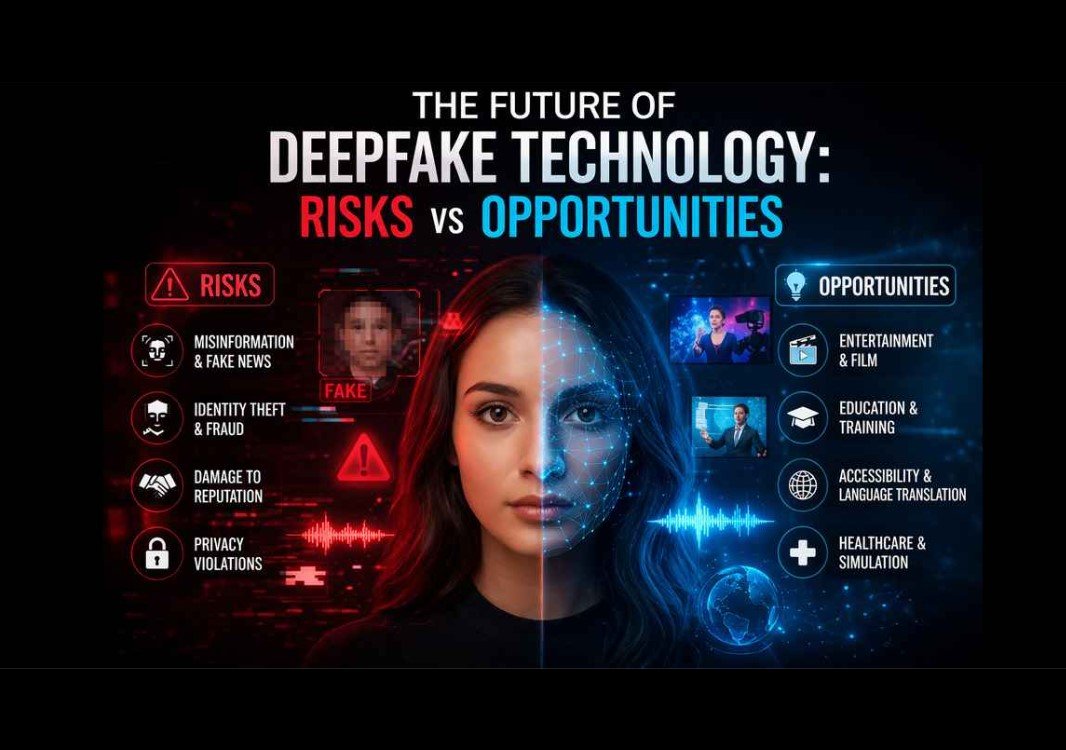
Despite the controversies, deepfake technology offers several innovative and beneficial applications across different industries. In the entertainment sector, filmmakers and studios use deepfake tools to create realistic visual effects, de-age actors, and recreate historical characters without expensive production processes. The technology is also improving content localization by synchronizing lip movements with translated audio for global audiences. In education and training, deepfakes can create realistic simulations for medical training, military exercises, and online learning experiences. Businesses are using AI-generated avatars and voice cloning to improve virtual customer service and digital marketing campaigns. Deepfake technology is also helping people with disabilities by creating personalized voice synthesis systems for communication support. In gaming and virtual reality, AI-generated characters provide more immersive user experiences. As the technology evolves, industries are discovering new ways to use deepfakes creatively and efficiently. When used responsibly, deepfake technology has the potential to improve digital communication, entertainment, and learning experiences significantly.
Positive Applications
- Film and entertainment production
- AI-generated virtual assistants
- Language translation and dubbing
- Educational simulations
- Gaming and virtual reality experiences
Risks and Dangers of Deepfake Technology
While deepfakes offer innovation, they also create major risks for society and digital security. One of the biggest concerns is misinformation and fake news. Deepfake videos can make public figures appear to say or do things they never actually did, creating confusion and manipulating public opinion. During elections or political events, fake videos can spread rapidly across social media platforms and influence millions of people. Deepfake scams are also increasing in financial fraud and cybercrime. Criminals now use AI-generated voice cloning to impersonate company executives, family members, or government officials to steal money or sensitive information. In addition, deepfakes are causing serious privacy and reputation issues, especially through non-consensual fake content targeting individuals. As AI-generated media becomes more realistic, distinguishing between real and fake content is becoming increasingly difficult. This growing trust problem poses a major threat to journalism, public communication, and online safety worldwide.
Major Risks
- Fake news and misinformation
- Identity theft and fraud
- Political manipulation
- Reputation damage
- Privacy violations
The Role of AI and Social Media in Deepfake Growth
The rapid growth of deepfake technology is closely connected with advances in artificial intelligence and the widespread use of social media platforms. AI tools have become more affordable and accessible, allowing almost anyone to create realistic fake content using simple software applications. Open-source AI models and online editing tools have accelerated the spread of deepfake creation globally. Social media platforms further amplify the problem because fake videos and manipulated content can go viral within minutes. Many users share content without verifying its authenticity, increasing the spread of misinformation. In addition, recommendation algorithms on social media often prioritize engaging content, which may unintentionally promote sensational deepfake videos. Technology companies are now investing in AI-based detection systems to identify manipulated content and reduce its spread. Governments and cybersecurity organizations are also developing regulations and digital verification systems to combat deepfake misuse. However, as AI technology improves, detecting sophisticated deepfakes is becoming more challenging.
Factors Driving Deepfake Growth
- Advanced AI algorithms
- Easy access to editing tools
- Social media virality
- Weak content verification
- Growing digital media consumption
The Future of Deepfake Technology and Conclusion
Deepfake technology will continue evolving rapidly in the coming years, bringing both innovation and challenges to society. AI-generated media is expected to become even more realistic, interactive, and difficult to detect. Businesses will likely expand deepfake usage in entertainment, education, marketing, and customer engagement. At the same time, cybersecurity experts, governments, and technology companies will need stronger solutions to prevent misuse and protect digital trust. AI-powered detection systems, digital watermarking, blockchain verification, and stricter regulations may become essential tools in combating harmful deepfakes. Public awareness and digital literacy will also play an important role in helping people identify manipulated content online. The future impact of deepfake technology will depend largely on how responsibly it is developed and regulated. While deepfakes offer exciting opportunities for creativity and innovation, they also present serious ethical and security concerns that cannot be ignored in the modern digital world.
Conclusion
Deepfake technology represents both the power and danger of artificial intelligence in 2026. It is transforming industries through innovation while simultaneously creating new threats related to misinformation, fraud, privacy, and cybersecurity. As deepfakes become more advanced and accessible, society must balance technological progress with ethical responsibility and stronger digital protection measures.