

B2B brand discoverability is becoming a critical part of how businesses attract, educate, and earn the trust of potential customers. For years, companies have focused their digital marketing strategies on driving traffic to their websites through search engine optimisation (SEO), paid advertising, landing pages, and content marketing. While these channels remain important, the way business buyers discover and evaluate potential providers is evolving.
Today, a prospective customer might encounter a company through a LinkedIn post, an industry publication, a customer review, a professional recommendation, or an AI-powered search tool. They may compare several providers, research technical capabilities, and form an initial opinion before visiting any company’s website. By the time they arrive at a vendor’s digital property, they may already have a shortlist of potential partners.
This shift presents an important challenge for B2B organisations. Digital visibility is no longer just about ranking in search results or attracting website visitors. It is about ensuring that accurate, useful, and credible information about a business is available wherever potential buyers conduct their research. Companies that recognise this broader discovery landscape can build stronger brand awareness, communicate their expertise more effectively, and earn consideration earlier in the buying journey.
Why B2B Brand Discoverability Matters More Than Ever –
B2B purchasing decisions rarely happen after a single interaction. They often involve multiple stakeholders, detailed evaluations, budget considerations, technical assessments, and internal discussions. Each stakeholder may approach the same buying decision with different questions and use different sources to find answers.
A technology leader might investigate security, integrations, and scalability. A finance executive may focus on costs, operational efficiency, and expected business value. A department head may want to understand how a solution addresses an existing workflow problem. Each person develops a perspective that can influence the final decision.
Consequently, a company’s digital presence must support more than one type of buyer and more than one stage of research. Its information should help prospective customers understand the problem, evaluate possible solutions, assess the company’s capabilities, and determine whether further engagement is worthwhile.
Consider a B2B software provider that invests heavily in its website but has limited educational content, an inactive LinkedIn presence, and little information available through independent industry sources. Its website may communicate the product’s features effectively, yet potential buyers who discover competitors through other channels may never consider visiting it.
A stronger approach connects the website with the broader digital environment in which buying decisions begin.
- Discovery: Help relevant audiences encounter the brand through search, social platforms, industry content, and professional communities.
- Evaluation: Provide clear explanations, practical resources, product information, and credible evidence that help buyers compare options.
- Trust: Maintain consistent messaging and demonstrate expertise across relevant digital touchpoints.
- Conversion: Make it easy for interested buyers to request a consultation, explore a product, or contact the appropriate team.
The objective is not to appear everywhere. It is to establish a credible and recognisable presence in the channels that matter to the people a business wants to reach.
Expand Your Digital Strategy Beyond Your Website –
A company’s website remains a central business asset. It provides control over messaging, supports lead generation, hosts detailed resources, and offers a direct route for customer enquiries. However, relying on the website as the primary destination for every marketing activity can limit the brand’s reach.
Potential buyers discover information through multiple channels, including search engines, professional networks, industry publications, customer communities, review platforms, and AI-assisted research tools. Each channel contributes differently to awareness and evaluation.
A practical B2B digital marketing strategy should therefore treat the website as part of a connected discovery ecosystem rather than an isolated destination.
For example, a cybersecurity company could publish an in-depth guide to risk management on its website, share key insights through LinkedIn, contribute expert commentary to an industry publication, and provide detailed security documentation for technical evaluators. Each activity serves a distinct audience need while reinforcing the same expertise.
To put this approach into practice:
- Identify the digital channels your target buyers use to research problems and evaluate vendors.
- Adapt core insights into formats suited to each channel instead of duplicating identical promotional messages.
- Ensure that important information, including services, product capabilities, company descriptions, and contact details, remains consistent.
- Connect relevant channels to deeper resources where buyers can explore the subject further.
This approach broadens the opportunities for discovery while preserving the website’s role as a trusted source of detailed information.
Optimise Content for AI Search and Answer Engines –
AI-powered search tools are changing how people gather and interpret information. Instead of navigating several websites independently, users can ask questions, request summaries, explore alternatives, and seek explanations through conversational interfaces.
Traditional search engines continue to play an important role, but AI-assisted discovery introduces additional ways for people to encounter information about businesses and their offerings.
For companies investing in B2B brand discoverability, this makes content clarity and usefulness particularly important. AI systems may draw on accessible information from websites, documentation, articles, and other sources when generating responses. However, the sources used vary by platform and query, and no particular content format guarantees inclusion in an AI-generated answer.
Businesses should focus on making their expertise easy to understand, verify, and contextualise.
What does AI-friendly content look like?
Useful content answers a specific question directly, explains important concepts in plain language, and provides enough context to help readers understand the subject.
For example, a cloud services provider could create resources addressing questions such as:
- What should businesses assess before migrating workloads to the cloud?
- How can enterprises evaluate cloud security and compliance requirements?
- What factors influence cloud migration costs and implementation timelines?
- When should an organisation modernise an existing application rather than replace it?
These resources provide practical value to readers while clearly communicating the provider’s knowledge of the subject.
Businesses can strengthen this approach by using descriptive headings, concise definitions, relevant examples, logical internal links, and clearly attributed evidence. Technical SEO fundamentals, including crawlability, indexability, and appropriate structured data, also remain relevant.
The goal is not to write exclusively for AI systems. It is to create accurate, accessible content that serves human readers well and can be interpreted effectively by digital discovery systems.
Build Authority Through Educational Content –
Many B2B marketing teams focus heavily on company announcements, product launches, service descriptions, and promotional campaigns. Although these activities have a place in a content strategy, they may not adequately address the questions prospective customers ask before they are ready to speak with a vendor.
Educational content helps bridge that gap.
When a business explains industry challenges, clarifies complex topics, shares practical guidance, and explores potential solutions, it demonstrates an understanding of the customer’s problem before promoting its own offering.
For example, a data analytics consultancy could publish an article about why different departments produce conflicting reports. The article might explain data silos, inconsistent definitions, fragmented systems, and governance challenges before discussing potential approaches to improving reporting.
This gives prospective customers useful information regardless of whether they are ready to purchase a service.
A well-planned educational content strategy can include:
- Problem-focused articles: Explain common operational challenges and their underlying causes.
- Practical guides: Help readers understand how to evaluate options or implement a process.
- Comparison resources: Clarify differences between technologies, approaches, or service models.
- Expert insights: Share informed perspectives on relevant industry developments.
- Case studies: Demonstrate how a business approached a real challenge, using verified details and outcomes.
Content should reflect the questions that matter to the intended audience. Marketing teams can identify these questions through sales conversations, customer interviews, support requests, search data, and industry discussions.
Over time, a collection of useful resources can help establish the business as a credible source of information, not merely a provider seeking to sell a product.
Maintain Consistent Brand Messaging Across Channels –
Visibility alone does not guarantee recognition or trust. If a company describes its services differently across its website, social profiles, product listings, and public documentation, prospective buyers may struggle to understand its positioning.
Inconsistent messaging can create uncertainty about what the company does, whom it serves, and what differentiates its offering.
For example, a technology consultancy might describe itself as an AI transformation partner on its website, a general IT services provider on LinkedIn, and a software development company in a third-party directory. These descriptions may each reflect part of its business, but together they can create an unclear market position.
Consistency does not mean repeating identical copy everywhere. It means maintaining a shared foundation while adapting the message to the purpose of each channel.
A company can strengthen consistency by establishing:
- A clear positioning statement: Explain who the business serves, which problems it addresses, and how its offering creates value.
- Consistent terminology: Use the same names for products, services, capabilities, and target customer segments.
- Accurate public profiles: Review company descriptions, leadership information, service details, and contact information regularly.
- Aligned messaging: Ensure that website content, social media posts, sales materials, and product documentation reinforce the same core proposition.
This consistency helps buyers develop a coherent understanding of the brand across different interactions. It also reduces ambiguity for search engines and other digital systems interpreting publicly available company information.
Strengthen Credibility With Evidence and Expertise –
B2B buyers often evaluate more than a company’s stated capabilities. They want evidence that the business understands their requirements and can deliver what it promises.
Broad statements such as “industry-leading innovation,” “best-in-class technology,” or “transformative business outcomes” may sound persuasive, but they offer limited value when unsupported by meaningful evidence.
Credibility improves when businesses explain their approach, demonstrate relevant experience, and substantiate claims with appropriate information.
For a software company, this might include detailed product documentation, integration information, security practices, implementation guidance, and verified customer case studies. For a consulting firm, it could involve explaining its methodology, sharing relevant project experience, and demonstrating how it approaches complex business problems.
Useful credibility signals include:
- Customer case studies that describe the challenge, approach, and verified results.
- Testimonials and reviews presented with appropriate context and permission.
- Relevant certifications, qualifications, and documented technical capabilities.
- Original research, expert commentary, and clearly sourced industry analysis.
- Transparent explanations of service scope, implementation requirements, and limitations.
The evidence should match the claim. A certification should not be presented as proof of capabilities it does not cover, and a customer success story should not imply that the same outcome is guaranteed for every organisation.
For businesses competing in complex technology markets, precise and verifiable information can be more persuasive than exaggerated promotional language.
Measure Discovery Beyond Website Traffic –
Website traffic, search rankings, page views, and form submissions remain useful indicators of digital performance. However, they do not always explain how a buyer first encountered a brand or which interactions influenced a later decision.
A prospective customer might discover a company through a LinkedIn post, read an educational article, see a recommendation in an industry discussion, and eventually visit the website through a direct search. Looking only at the final visit can obscure the broader sequence of interactions.
This does not mean every digital interaction has a measurable impact or that traditional metrics should be discarded. It means that measurement should reflect the purpose of each activity.
For example, a campaign designed to generate qualified leads should be evaluated differently from an educational article intended to answer early-stage research questions.
A more complete measurement framework can include:
| Objective | Useful indicators |
|---|---|
| Improve search visibility | Relevant keyword rankings, organic impressions, qualified organic traffic |
| Expand brand awareness | Relevant audience reach, branded search trends, engagement with expert content |
| Support buyer education | Resource engagement, return visits, content consumption patterns |
| Generate demand | Qualified enquiries, demo requests, content-assisted conversions |
| Improve lead quality | Sales feedback, lead qualification outcomes, progression through the pipeline |
These indicators should be interpreted in context rather than treated as independent proof of success. Branded search activity, for instance, can be influenced by several factors beyond a specific marketing campaign.
Marketing teams should also combine quantitative data with qualitative insights from sales conversations and customer feedback. Together, these sources can help reveal whether content is reaching the right audience and answering meaningful questions.
7. Align Marketing and Sales Around Buyer Questions
Marketing and sales teams often interact with different parts of the customer journey. Marketing observes content engagement, search behaviour, and campaign performance. Sales hears direct questions, objections, concerns, and requests for clarification from potential customers.
When these insights remain separate, businesses may miss opportunities to improve their digital content and buyer experience.
Closer collaboration allows both teams to develop a clearer understanding of what prospective customers need to know before making a decision.
Consider a software provider whose sales team repeatedly receives questions about integration requirements, implementation timelines, and migration risks. These questions indicate opportunities to improve the company’s digital resources.
Marketing could respond by developing a technical integration guide, a migration planning checklist, an implementation FAQ, and a comparison page explaining the available deployment options.
Such resources help buyers conduct their research independently while giving sales teams useful material to share during conversations.
To establish this collaboration:
- Schedule regular discussions about recurring prospect questions and objections.
- Review which resources sales teams use most frequently and where information gaps remain.
- Prioritise content that addresses important buying barriers rather than publishing solely to maintain a posting schedule.
- Gather feedback on whether new resources improve the quality of conversations or help prospects understand the offering.
The result is a more connected approach to discovery, education, and conversion, with content shaped by real customer needs.
How to Build a Practical B2B Brand Discoverability Strategy –
Improving discoverability does not require a business to launch campaigns across every available platform at once. A focused, structured approach is often more practical because it allows teams to identify gaps, prioritise improvements, and evaluate what works.
The starting point is to assess the company’s current digital presence from the perspective of a first-time buyer.
Audit Your Existing Digital Presence:
Begin by reviewing the website, search visibility, LinkedIn presence, relevant industry listings, customer-facing documentation, and other channels where the company appears.
Ask whether a prospective customer can quickly understand the business, its target audience, the problems it solves, and the evidence supporting its claims.
Identify outdated information, inconsistent descriptions, missing resources, and important questions that remain unanswered.
Map the Buyer Research Journey:
Document the questions buyers are likely to ask at different stages of their evaluation.
Early-stage questions may concern the nature of a problem, while later-stage questions may involve implementation, integrations, costs, security, or vendor comparisons.
Use these questions to prioritise the topics that deserve the most attention.
Strengthen High-Value Content:
Improve existing pages before assuming that more content is always necessary.
Make service descriptions more specific, add useful examples, clarify technical requirements, strengthen internal links, and include evidence where appropriate. Develop new resources when a genuine information gap exists.
Prioritise Relevant Discovery Channels:
Choose channels based on audience behaviour, available resources, and business objectives.
For one company, organic search and technical documentation may be central. For another, professional communities, industry publications, partner ecosystems, and LinkedIn may play a greater role.
Avoid spreading resources too thinly across channels that offer little relevance to the target market.
Establish a Review and Measurement Process:
Assign responsibility for maintaining key information and reviewing content performance.
Monitor relevant search visibility, qualified traffic, engagement, enquiries, and sales feedback. Revisit the strategy periodically as customer questions, business priorities, and digital platforms evolve.
The aim is to build a sustainable system for keeping the brand visible, understandable, and credible rather than relying on isolated marketing activities.
Common Mistakes That Limit B2B Brand Discoverability :
Even companies with substantial marketing resources can struggle to build a coherent digital presence. Several recurring mistakes can reduce the usefulness of their efforts.
Treating More Content as the Only Solution –
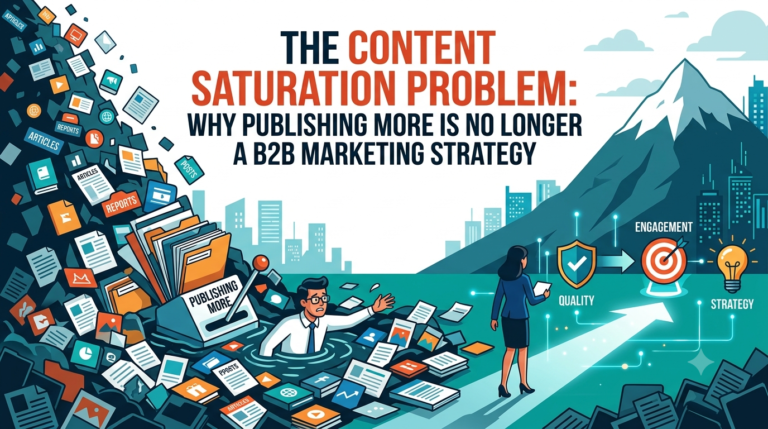
Publishing frequently does not automatically improve visibility or trust. Content needs a clear purpose, a defined audience, and information that adds value beyond existing material.
A smaller collection of comprehensive, well-maintained resources may be more useful than a large library of repetitive articles.
Chasing AI Visibility Without Strong Foundations –
AI search is an important consideration, but businesses should be cautious about techniques that promise guaranteed inclusion in AI-generated answers.
Clear positioning, accurate information, accessible content, sound technical SEO, and credible expertise provide a more durable foundation than attempts to manipulate a particular platform’s behaviour.
Focusing on Rankings Without Considering Buyer Needs –
A page can attract visitors without helping them understand a business or make an informed decision. Keyword targeting should therefore be connected to genuine user intent.
Content should explain the topic, answer relevant questions, and guide readers towards appropriate next steps without forcing a sales message into every section.
Neglecting Information Outside the Website –
Outdated profiles, inconsistent product descriptions, and inaccurate third-party listings can undermine the information presented on the company’s own website.
Regular reviews help ensure that the most important public-facing information remains accurate and aligned.
Measuring Every Activity by Immediate Leads –
Educational content often serves buyers who are not yet ready to speak with sales. Expecting every article or expert post to generate immediate enquiries can lead to poor decisions about content investment.
Measurement should reflect the intended role of the activity while still maintaining accountability for business outcomes.
The Future of B2B Digital Marketing: From Website Traffic to Brand Discoverability
The evolution of digital discovery does not make websites less important. It changes how businesses should connect their websites with the wider information environment in which buyers research and evaluate potential providers.
Search engines, professional networks, independent publications, customer reviews, and AI-assisted tools can all contribute to how a company is encountered and understood. Their relative importance varies by audience and industry, but together they illustrate why digital strategy should extend beyond a single destination.
For B2B organisations, this creates an opportunity to move from disconnected marketing activities towards a more coherent approach to brand discoverability. Instead of treating SEO, content marketing, social media, technical documentation, and sales enablement as separate initiatives, businesses can align them around the questions their customers need answered.
This requires a commitment to useful information, consistent messaging, credible evidence, and ongoing measurement. It also requires accepting that no organisation can fully control where its brand appears, how platforms present information, or when a prospective customer decides to engage.
What businesses can control is the quality and clarity of their own information, the relevance of their content, and the consistency of their presence across the channels they manage.
Conclusion –
B2B brand discoverability is no longer simply a matter of bringing more visitors to a company website. It is about helping the right people discover a business, understand its expertise, evaluate its credibility, and recognise its relevance wherever they research potential solutions.
Websites remain essential for communicating value, publishing detailed resources, and converting interest into meaningful engagement. However, their effectiveness is strengthened when the wider digital presence supports the same message through educational content, professional networks, credible external references, and clear product information.
Businesses that want to improve their discoverability should begin with the fundamentals: understand buyer questions, strengthen existing content, maintain consistent messaging, demonstrate expertise with evidence, and measure performance against meaningful business objectives. AI search visibility should form part of this broader strategy, not replace established SEO practices or customer-focused marketing.
Frequently Asked Questions
B2B brand discoverability is the ability of a business to be found, recognised, and understood by potential customers across the digital channels they use for research. These channels can include search engines, company websites, professional networks, industry publications, review platforms, and AI-powered search tools.
A website remains an essential business asset, but buyers often research potential providers through several sources before visiting a company’s website. They may encounter educational content on LinkedIn, read industry commentary, consult customer reviews, or use AI tools to explore potential solutions.
AI-powered search tools can summarise information, answer questions, and help users compare potential solutions. Depending on the platform and query, these responses may draw on information from company websites, technical documentation, articles, and other accessible sources.
Traditional SEO focuses on helping search engines discover, understand, and rank web pages for relevant queries. AI search optimisation extends the consideration to how information may be retrieved, interpreted, and presented in AI-generated answers.
B2B companies can improve discoverability by strengthening their website content, addressing common customer questions, maintaining consistent company information, sharing expertise through relevant channels, and providing credible evidence of their capabilities.
They should also review technical SEO, identify gaps in the buyer journey, and measure whether their activities attract relevant audiences and support business objectives.