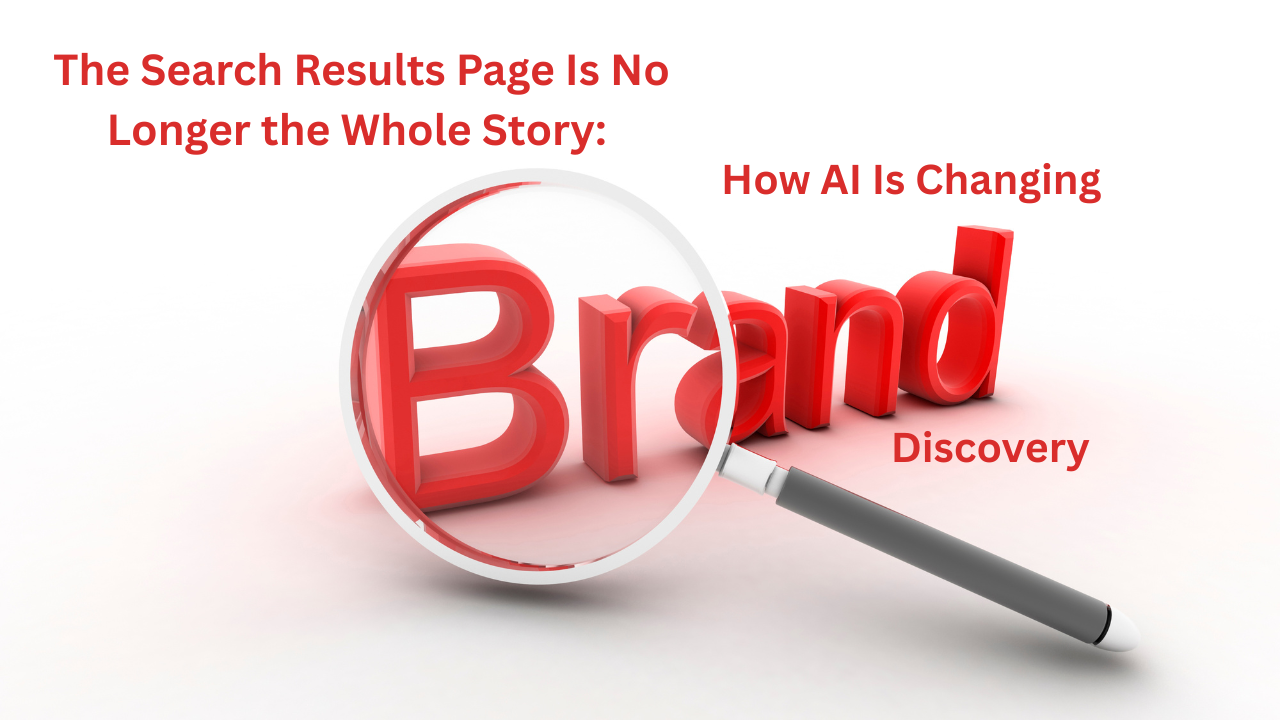
AI-Powered Brand Discovery is changing how businesses attract attention, build credibility, and become part of their customers’ purchasing decisions. For years, digital marketing strategies focused heavily on search engine rankings, organic traffic, paid campaigns, and website clicks. Businesses optimized their content to appear prominently in search results, expecting potential customers to visit their websites, compare alternatives, and gradually move toward a buying decision. However, the growing use of AI-powered search experiences and conversational assistants is introducing another way for buyers to discover information, evaluate solutions, and identify potential vendors.
Instead of simply presenting a list of links, AI-powered search tools can summarize information, explain complex topics, compare products, and provide answers based on information gathered from different sources. For example, a business leader researching enterprise software might ask an AI assistant to compare platforms, explain implementation challenges, or identify suitable solutions for a particular business requirement. The buyer may develop an initial understanding of the available options before visiting any vendor’s website. This creates a new challenge for businesses: visibility is no longer just about appearing in search results. It is also about making a brand’s expertise understandable, credible, and relevant when buyers seek answers through AI-driven experiences.
For B2B technology companies, this shift creates both opportunities and challenges. Buyers frequently begin their research by exploring business problems rather than searching for a specific product. They may investigate declining sales conversions, inefficient workflows, outdated infrastructure, or difficulties scaling operations before deciding which type of solution they need. Companies that provide clear, trustworthy, and genuinely useful information can influence this early research process. To adapt, marketers need to combine traditional SEO fundamentals with a stronger focus on content quality, brand consistency, subject-matter expertise, and meaningful business outcomes.
What Is AI-Powered Brand Discovery?
AI-powered brand discovery refers to the process through which people encounter, learn about, and evaluate businesses through AI-assisted search experiences, conversational tools, and other AI-driven information channels.
Traditional search engines typically present users with a ranked list of results. AI-powered experiences may also generate summaries, answer questions directly, compare alternatives, and provide links to supporting sources. Depending on the platform and the query, users may discover a brand through a cited article, a product comparison, a technical explanation, or a recommendation included in an AI-generated response.
This changes how businesses should think about online visibility. A company may attract visitors through traditional organic search while also influencing potential buyers through content they encounter in AI-assisted research. Conversely, a business that ranks well for a particular keyword may not necessarily be included in every AI-generated answer related to its industry.
AI-powered brand discovery does not replace traditional search engine optimization. Instead, it expands the environment in which content can be discovered, interpreted, and used.
Why AI-Powered Brand Discovery Matters for B2B Businesses –
B2B purchasing decisions often involve multiple stakeholders, detailed research, and considerable evaluation before a vendor is selected. AI tools can help buyers organize their research and understand unfamiliar topics, which makes the quality of a company’s publicly available information increasingly important.
For example, a technology leader evaluating cloud infrastructure may first research security considerations, scalability requirements, migration risks, and cost management. A company that publishes useful explanations of these issues can help the buyer understand the problem before a formal vendor evaluation begins.
Businesses should therefore consider whether their digital presence helps potential customers:
- Understand the business problems they are experiencing.
- Explore relevant approaches and potential solutions.
- Compare options using meaningful evaluation criteria.
- Verify the company’s capabilities and credibility.
- Identify the next steps required to make an informed decision.
The objective is not simply to appear in AI-generated responses. It is to become a credible source of information throughout the customer research journey.
Create Helpful, In-Depth Content That Answers Real Buyer Questions –
One of the most important ways to strengthen AI-powered brand discovery is to create content that directly addresses the questions potential customers ask.
AI tools have made it easier for businesses to generate articles, product descriptions, and social media posts at scale. However, publishing more content does not automatically improve visibility or establish authority. When multiple businesses publish similar material that repeats general advice, it becomes difficult for readers to identify meaningful differences in expertise.
B2B buyers need more than broad explanations of familiar concepts. They want practical insights that help them evaluate problems, understand trade-offs, and make decisions that affect their organizations.
Focus on Questions Buyers Actually Ask :
Start by identifying the questions customers ask during discovery calls, product demonstrations, sales meetings, and implementation discussions. These questions often reveal opportunities to create useful content.
For example, a company selling enterprise automation software might discover that prospects frequently ask:
- Which business processes are suitable for automation?
- What implementation challenges should organizations anticipate?
- How can automation integrate with existing enterprise systems?
- How should businesses evaluate the potential return on investment?
- What risks should decision-makers consider before deployment?
These questions can become the foundation for detailed articles, implementation guides, comparison pages, and educational resources.
Prioritize Depth and Practical Value –
A useful article should explain more than the basic definition of a topic. It should provide context, discuss relevant considerations, and help readers understand what to do next.
Businesses can improve their content by:
- Including practical examples and realistic business scenarios.
- Explaining the advantages and limitations of different approaches.
- Addressing common misconceptions and implementation challenges.
- Supporting factual claims with credible references.
- Providing clear answers to specific questions.
For B2B technology brands, this approach creates a stronger foundation for both traditional SEO and AI-powered brand discovery. The goal is to publish information that genuinely deserves the reader’s attention rather than producing content solely to increase publishing frequency.
Strengthen Traditional SEO Alongside AI Search Optimization –
The growth of AI-powered search does not make traditional SEO irrelevant. Search engines remain important discovery channels, and websites still need useful content, accessible navigation, sound technical architecture, and relevant page titles.
AI search optimization should therefore build on established SEO practices rather than replace them with an entirely separate strategy.
Search platforms use different systems to discover, retrieve, rank, and present information. Their behavior varies, and no single optimization technique guarantees that a brand will appear in an AI-generated answer.
Build a Strong Technical SEO Foundation –
Before investing heavily in new optimization techniques, businesses should ensure that their websites are accessible, well organized, and easy to understand.
Important considerations include:
- Crawlability: Ensure that relevant pages can be discovered by search engines and that technical settings do not unintentionally block important content.
- Indexability: Review indexing directives, canonical tags, and other settings that influence which pages search engines may include in their indexes.
- Site structure: Organize related content into logical sections that help users navigate topics.
- Page performance: Provide a usable experience across devices and avoid unnecessary technical friction.
- Structured data: Use appropriate schema markup when it accurately describes the content and meets the relevant search engine guidelines.
- Content accessibility: Present important information in readable text and avoid hiding essential details behind unnecessary interface elements.
These practices support a reliable foundation for organic discovery, although their impact on any particular AI platform depends on that platform’s systems.
Use Generative Engine Optimization Thoughtfully –
Generative Engine Optimization (GEO) is a term used for approaches intended to improve a brand’s visibility in AI-generated search responses and answer experiences.
Rather than treating GEO as a guaranteed shortcut, businesses should focus on practices that also improve the usefulness and credibility of their content. These include providing clear explanations, maintaining accurate information, supporting claims with evidence, and answering specific questions comprehensively.
For example, a cybersecurity provider should explain its capabilities, intended use cases, implementation requirements, and relevant limitations. A clear and well-supported resource is more useful to buyers than a page filled with repeated keywords and unsupported claims.
The key principle: Build content that works for people first while maintaining the technical and editorial standards that support discoverability across search environments.
Build Brand Authority Through Original Expertise –
In a crowded digital environment, publishing general information is rarely enough to distinguish a company from its competitors. AI can produce polished explanations of common topics, but businesses still need to demonstrate why their particular knowledge, experience, or approach is valuable.
Brand authority develops when a company consistently provides useful information, demonstrates subject-matter expertise, and supports its claims with credible evidence.
For B2B organizations, this means moving beyond broad marketing statements such as “industry-leading innovation” or “next-generation digital transformation.” Buyers need to understand what the company actually does, which challenges it addresses, and why its approach is relevant.
Develop Content That Reflects Real Experience –
Businesses can differentiate their content by incorporating insights from people who understand the subject in depth.
Potential contributors include:
- Product managers who understand product capabilities and limitations.
- Engineers who can explain technical decisions and integration challenges.
- Consultants who understand operational and implementation requirements.
- Sales professionals who hear recurring questions and objections from buyers.
- Customer success teams that understand adoption challenges and ongoing needs.
These experts can contribute practical insights that make content more specific and valuable.
For example, a company offering enterprise data integration services could publish an article explaining common causes of integration delays, the trade-offs between different architectural approaches, and the questions organizations should ask before beginning a migration.
Such material provides practical value while demonstrating a deeper understanding of the problem.
Support Expertise With Credible Evidence –
Useful forms of evidence include:
- Original research with a transparent methodology.
- Detailed customer case studies supported by verified results.
- Technical documentation and implementation guides.
- Expert commentary on relevant industry developments.
- Comparisons that explain genuine differences and trade-offs.
- Original frameworks that help buyers evaluate business decisions.
Not every business needs proprietary research or extensive customer data to produce valuable content. A carefully researched explanation of a complex topic can also demonstrate expertise.
The important distinction is between simply claiming authority and giving readers meaningful reasons to trust the information.
Maintain Consistent Brand Information Across Digital Channels –
Brand discovery does not happen on a single website or through one marketing channel. Potential buyers may encounter a company through its official website, professional social media profiles, industry publications, customer reviews, partner directories, technical documentation, and third-party discussions.
These sources can influence how buyers understand a company’s expertise, capabilities, and market positioning. Depending on the system, AI-powered tools may also retrieve or process information from multiple sources when generating responses.
If a company’s public information is inconsistent, it becomes harder for readers to form a clear understanding of the brand.
For example, a technology consultancy might describe itself as a cloud transformation specialist on its website, a general IT services provider on a business directory, and a software product company in an outdated article. Each description may contain some truth, but together they create an unclear picture of the company’s core offering.
Create a Clear and Consistent Brand Identity –
Businesses should review how they describe their organization, products, services, and target customers across important digital channels.
Practical steps include:
- Use consistent company descriptions and service terminology.
- Keep product pages, executive biographies, and company profiles updated.
- Ensure that contact information and business details are accurate.
- Align messaging across the website, social profiles, and partner listings.
- Remove or update outdated information that no longer reflects the business.
- Maintain clear documentation of product capabilities and supported use cases.
Consistency does not mean repeating identical wording everywhere. Different channels may require different formats and levels of detail. What matters is that the underlying facts and positioning remain aligned.
A coherent digital presence helps human researchers understand the company and provides a more consistent body of public information for discovery systems to encounter.
Optimize Content for the Entire B2B Buyer Journey –
B2B buyers rarely make complex purchasing decisions after reading a single article. They usually move through several stages, beginning with problem identification and progressing toward research, evaluation, stakeholder discussions, and a final decision.
AI-powered discovery can influence these stages by helping buyers understand unfamiliar concepts, identify possible approaches, and compare potential solutions.
Businesses should therefore avoid focusing their entire content strategy on product-related keywords. They also need to address the questions buyers ask before they know which product or vendor they need.
Awareness Stage: Help Buyers Understand the Problem –
At the awareness stage, buyers may not have identified a specific solution category.
A business offering sales automation software, for example, could publish content about manual sales administration, inconsistent follow-ups, and common causes of pipeline inefficiency.
Useful formats include educational articles, introductory guides, industry explainers, and practical checklists.
Consideration Stage: Explain Possible Approaches –
During consideration, buyers begin comparing different methods and evaluating potential solutions.
Content at this stage might include:
- Solution comparison guides.
- Implementation planning resources.
- Technical explainers.
- Evaluation checklists.
- Articles discussing costs, limitations, and trade-offs.
This content helps readers understand their options without assuming that a particular product is automatically the best choice.
Conclusion
AI-Powered Brand Discovery is reshaping the way businesses think about digital visibility. Traditional search rankings and website traffic remain important, but they are no longer the only ways potential customers may encounter information about a company. AI-powered search experiences can help buyers understand business problems, compare approaches, and discover brands before they begin visiting vendor websites directly.
For B2B technology companies, this creates an opportunity to strengthen their position by providing genuinely useful content, demonstrating original expertise, maintaining consistent brand information, and supporting buyers throughout their research journey. Strong technical SEO, thoughtful AI search optimization, credible evidence, and human editorial oversight all contribute to a more reliable digital presence.