Agentic AI in B2B is changing how enterprises approach automation, moving beyond predefined rules and isolated tasks toward intelligent systems that can plan, make decisions within defined boundaries, and execute multistep business workflows. As organizations look for ways to streamline operations and manage growing process complexity, AI agents are emerging as a new approach to connecting data, applications, and business decisions.
Traditional automation has helped businesses reduce repetitive manual work, standardize processes, and improve operational consistency. However, many enterprise workflows still require human intervention when exceptions arise, information is incomplete, or decisions depend on multiple systems. Agentic AI introduces a different model: systems that can interpret goals, determine appropriate next steps, use authorized tools, and adapt their actions based on results.
For B2B organizations, the opportunity extends beyond automating individual activities. It involves rethinking how work moves across departments, from lead qualification and customer onboarding to procurement, finance, IT support, and supply chain operations. The challenge is to introduce autonomy without compromising security, accountability, compliance, or human oversight. Understanding this balance is essential for businesses seeking to turn AI experimentation into practical, scalable enterprise capabilities.
What Is Agentic AI in B2B?
Agentic AI in B2B refers to the use of AI-powered agents that can pursue business objectives through a sequence of actions, using relevant information, authorized tools, and decision-making capabilities. Instead of responding only to a single instruction, an agent can break a goal into smaller tasks, evaluate available information, take action, and assess whether the intended outcome has been achieved.
For example, a conventional automation workflow might send a notification when a prospective customer submits a form. An AI agent could potentially go further by reviewing the prospect’s information, checking approved business data sources, evaluating qualification criteria, updating a CRM record, preparing a personalized follow-up, and routing the opportunity to the appropriate sales representative.
The important distinction is that agentic AI is not simply another name for a chatbot or a traditional automation script. It introduces a more flexible approach to executing workflows that involve multiple steps, changing conditions, and contextual decisions.
How Agentic AI Differs From Traditional Automation
Traditional automation generally follows predefined rules and workflows. It performs reliably when the process is predictable, the inputs are structured, and the expected outcomes are clearly defined. Agentic AI can add value when a process requires interpretation, prioritization, or adjustments based on changing information.
Key differences include:
- Decision-making: Rule-based automation follows predefined conditions, while AI agents can evaluate context and select actions within their configured boundaries.
- Workflow flexibility: Traditional workflows often require explicit rules for different scenarios. Agentic systems can potentially handle a wider range of situations, subject to their capabilities and safeguards.
- Tool usage: AI agents can interact with authorized enterprise systems, APIs, databases, and applications to complete multistep tasks.
- Exception handling: Agents can identify missing information, attempt permitted recovery actions, or escalate cases that require human judgment.
- Goal orientation: Instead of automating one isolated activity, an agent can work toward a defined business outcome across several connected steps.
These differences do not mean traditional automation is becoming obsolete. In many enterprise environments, the most effective architecture combines conventional automation for predictable tasks with agentic AI for activities requiring interpretation and adaptive decision-making.
Why B2B Enterprises Are Moving Toward Autonomous Business Workflows
Enterprise processes rarely operate within a single application or department. A customer onboarding workflow, for example, may involve sales, finance, legal, customer success, IT, and compliance teams. Each function may use different systems, follow different approval requirements, and maintain separate data.
Traditional automation can connect parts of this process, but exceptions and ambiguous requests often create bottlenecks. Employees may still need to gather information manually, interpret documents, resolve conflicting records, and coordinate actions across teams.
Agentic AI offers a way to manage more of this complexity by coordinating tasks across connected systems. Rather than treating each activity as an independent automation opportunity, businesses can design workflows around broader outcomes.
From Task Automation to Outcome-Oriented Execution
Consider a B2B company processing a new customer order. The process may require checking customer details, confirming pricing, validating contract terms, verifying inventory, coordinating delivery, and updating internal systems.
A traditional workflow can automate individual steps, but it may depend on a human to coordinate the entire process when a discrepancy appears. An agentic workflow could gather the relevant information, identify the discrepancy, determine which approved resolution paths are available, and route the case for authorization when necessary.
This shift can help organizations focus on outcomes such as completing an order accurately, resolving a service issue, or preparing a procurement recommendation rather than measuring automation solely by the number of tasks completed.
The potential business benefits include:
- Reduced manual coordination: Less time spent transferring information between systems and teams.
- Faster exception resolution: Better support for identifying missing information and determining appropriate next steps.
- Improved operational visibility: More structured records of actions, decisions, and unresolved issues.
- Greater process consistency: Standardized decision criteria and workflow controls across recurring activities.
- More effective use of employee expertise: Human teams can focus on complex decisions, relationships, and situations requiring accountability.
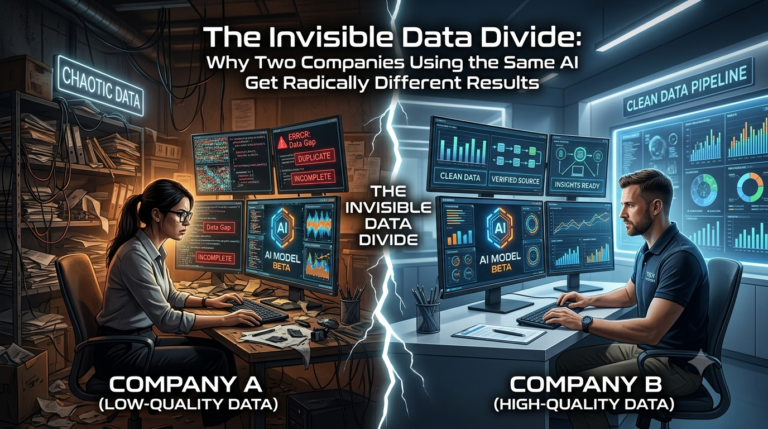
These benefits are not automatic. They depend on the quality of enterprise data, the reliability of integrations, the suitability of the workflow, and the effectiveness of governance controls.
7 Powerful Ways Agentic AI in B2B Can Transform Business Workflows
The value of agentic AI becomes clearer when examined through practical enterprise use cases. The strongest opportunities typically involve multiple steps, information spread across systems, repetitive coordination, and decisions that can be governed through explicit business rules.
1. Sales Operations and Lead Qualification
B2B sales teams often work with information distributed across CRM platforms, marketing automation tools, sales engagement systems, and customer research sources. Collecting and interpreting this information can consume valuable selling time.
An AI agent can assist by reviewing incoming leads, enriching records using authorized sources, comparing prospect information against qualification criteria, and recommending the next action. Depending on the organization’s controls, it may also update CRM fields, assign leads, or prepare follow-up communications for review.
For example, when a prospect requests a product demonstration, an agent could check the prospect’s industry, company profile, previous interactions, and stated requirements. It could then prepare a qualification summary and recommend the appropriate sales team.
Potential applications include:
- Lead research and prioritization.
- CRM record enrichment and maintenance.
- Follow-up preparation and task creation.
- Account planning and opportunity research.
- Sales pipeline monitoring and exception alerts.
Human oversight remains important for consequential customer communications, commercial commitments, and decisions that require relationship context.
2. Customer Onboarding and Account Management
B2B onboarding frequently involves collecting documents, verifying information, configuring accounts, assigning responsibilities, and coordinating internal approvals. Delays often occur because required information is incomplete or different teams are waiting on one another.
Agentic AI can help coordinate these activities by tracking onboarding requirements, identifying missing documents, checking workflow status, and prompting the relevant stakeholders. It can also summarize account information and prepare handoff notes for customer success teams.
For instance, an enterprise software provider could use an agent to monitor a new customer’s onboarding checklist. If technical configuration is complete but security documentation remains outstanding, the agent could identify the dependency, notify the responsible team, and update the onboarding status.
Useful applications include:
- Document collection and completeness checks.
- Customer data validation.
- Internal task assignment and status tracking.
- Onboarding progress summaries.
- Renewal preparation and account health monitoring.
The objective is not to remove human interaction from customer relationships. It is to reduce administrative friction so customer-facing teams can concentrate on implementation quality, adoption, and long-term value.
3. Procurement and Supplier Management
Procurement processes involve supplier research, purchase requests, contract documentation, budget checks, approvals, and delivery coordination. These activities frequently span procurement platforms, ERP systems, finance applications, and communication tools.
An AI agent can support procurement by reviewing purchase requests, extracting relevant information from documents, comparing supplier proposals against defined criteria, and identifying incomplete submissions. It can also prepare recommendations based on approved procurement policies.
Imagine a purchase request that exceeds a department’s standard spending threshold. An agent could validate the request, retrieve the relevant policy, identify the required approval level, and route the request to an authorized approver.
Potential applications include:
- Purchase request validation.
- Supplier document analysis.
- Quote comparison and recommendation preparation.
- Contract renewal reminders.
- Purchase order status monitoring.
- Supplier risk and compliance review support.
Financial commitments, supplier selection, and contractual decisions should remain subject to the organization’s approval policies. An agent’s recommendation should not be treated as verified fact without appropriate evidence and review.
4. Finance Operations and Invoice Processing
Finance teams handle recurring workflows such as invoice validation, purchase order matching, expense review, payment preparation, and reconciliation. Although many of these processes are already automated, exceptions can still require significant manual investigation.
Agentic AI can assist by gathering information from invoices, purchase orders, vendor records, and finance systems. It can identify discrepancies, categorize exceptions, request missing documentation, and prepare cases for finance personnel.
For example, if an invoice amount differs from the corresponding purchase order, an agent could compare the relevant records, identify the discrepancy, check the applicable tolerance policy, and route the case to the correct team rather than allowing it to move through the process unchecked.
Practical applications include:
- Invoice data extraction and validation.
- Purchase order and invoice matching support.
- Expense policy checks.
- Reconciliation exception investigation.
- Financial report preparation.
- Audit documentation and evidence collection.
Payment release, accounting adjustments, and other sensitive financial actions require clearly defined permissions and controls. Organizations should also maintain an auditable record of the information and rules supporting important decisions.
5. IT Service Management and Enterprise Support
Enterprise IT teams manage large volumes of service requests, access issues, software incidents, and troubleshooting tasks. Many requests follow known procedures, but resolving them may require information from several systems.
An agentic AI workflow can interpret a support request, retrieve relevant knowledge articles, gather diagnostic information through authorized tools, recommend a resolution, and update the ticket. Where permitted, it may execute predefined remediation steps or escalate the issue when its confidence or permissions are insufficient.
For example, an employee who cannot access an enterprise application could receive guided troubleshooting. The agent might check the service status, review approved diagnostic information, and identify whether the issue requires a password reset, a permissions review, or escalation to a specialist.
Potential applications include:
- IT ticket classification and routing.
- Knowledge retrieval and response drafting.
- Approved troubleshooting procedures.
- Incident summarization.
- Access request coordination.
- Escalation based on service-level requirements.
Actions involving privileged access, production infrastructure, or sensitive data should require stronger authorization and monitoring than routine support activities.
6. Supply Chain Coordination and Operations
Supply chain management depends on timely information about inventory, supplier commitments, transportation, demand, and production schedules. Disruptions can require teams to reassess plans and coordinate responses across multiple systems.
Agentic AI can support this process by monitoring approved operational data, identifying exceptions, gathering relevant context, and preparing recommended responses. Depending on the implementation, it may also initiate permitted notifications or update planning workflows.
For example, if a supplier reports a delayed shipment, an agent could check affected purchase orders, review inventory availability, identify potentially impacted production schedules, and prepare alternative sourcing or allocation options for the operations team.
Potential applications include:
- Shipment exception monitoring.
- Inventory discrepancy investigation.
- Supplier communication preparation.
- Demand and replenishment planning support.
- Production dependency analysis.
- Operational risk alerts.
These workflows are particularly useful when the objective is to coordinate information and decisions across existing systems rather than replace established planning and execution platforms.
7. Marketing Operations and Revenue Coordination
B2B marketing involves campaign planning, audience segmentation, content production, lead routing, performance reporting, and coordination with sales. Many tasks require teams to combine structured campaign data with unstructured customer feedback and market information.
AI agents can assist by collecting campaign performance data, identifying changes in engagement, preparing reports, suggesting audience segments, and coordinating approved follow-up activities.
For example, an agent could review a campaign’s performance against its objectives, identify which segments are engaging with the content, and prepare recommendations for the marketing team. It could then create proposed campaign adjustments for human review.
Practical applications include:
- Campaign reporting and analysis.
- Marketing data quality checks.
- Lead routing and sales handoff coordination.
- Content briefing and asset workflow management.
- Customer feedback summarization.
- Marketing and sales performance reporting.
Brand consistency, privacy requirements, consent rules, and campaign approval procedures must remain central to these workflows. Autonomous execution should be introduced only where the risks are understood and the necessary controls are in place.
How Agentic AI Works Within an Enterprise Technology Architecture
Deploying agentic AI in B2B requires more than connecting a language model to a business application. Enterprise workflows depend on secure access to systems, reliable information, clearly defined permissions, and mechanisms for verifying whether actions have succeeded.
A practical architecture typically combines an AI reasoning component with enterprise integrations, workflow orchestration, access controls, monitoring, and human approval mechanisms.
The Core Components of an Agentic AI Workflow
1. Business objective and instructions
The process begins with a defined goal, such as resolving a service request, preparing a procurement recommendation, or completing an onboarding checklist. Instructions should specify the intended outcome, constraints, and situations that require escalation.
2. Enterprise data and context
The agent retrieves relevant information from authorized systems, such as CRM records, ERP data, knowledge bases, contracts, and internal policies. Access should follow existing permissions, and information should be sufficiently current for the intended task.
3. Planning and task execution
The agent determines a sequence of steps appropriate to the goal. It may use enterprise APIs, workflow tools, document-processing capabilities, or other approved services to carry out those steps.
4. Verification and exception handling
After an action, the system checks whether the intended result occurred. If information is missing, a tool fails, or a policy constraint is encountered, the workflow should stop, retry within defined limits, or escalate to a human.
5. Governance and observability
The organization records relevant inputs, tool calls, approvals, outputs, and failures. Monitoring helps identify unexpected behavior, performance degradation, and opportunities for improvement.
An illustrative enterprise workflow might look like this:
Business request → Context retrieval → Plan generation → Authorized action → Outcome verification → Completion or escalation.
The sequence is not always linear. Some workflows require multiple iterations, parallel tasks, or additional approvals before the business objective can be completed.
Why Integration Matters More Than Model Selection Alone
An AI agent’s usefulness depends heavily on the systems and information it can access. A capable model cannot reliably complete a business process if customer records are inconsistent, APIs are unavailable, permissions are poorly defined, or critical policy information is missing.
Enterprise integration should therefore be treated as a core part of the implementation strategy.
Organizations should prioritize:
- Reliable APIs and well-defined system interfaces.
- Consistent identifiers across business applications.
- Access to current and authoritative data.
- Structured workflow states and validation rules.
- Centralized identity and permission management.
- Monitoring for failed or incomplete actions.
A model may generate a plausible response without accurately reflecting the state of a business system. For this reason, important workflow outcomes should be verified against authoritative sources rather than inferred from the agent’s own statements.
Agentic AI vs. Traditional Automation vs. AI Copilots
Agentic AI is best understood as one part of a broader enterprise automation strategy. Traditional automation, AI copilots, and AI agents solve overlapping but distinct problems.
| Capability | Traditional automation | AI copilot | Agentic AI |
|---|---|---|---|
| Primary role | Execute predefined rules | Assist with analysis and content generation | Pursue goals through multistep actions |
| Workflow behavior | Usually predictable and rule-driven | Primarily user-directed | Can adapt plans within defined boundaries |
| Human involvement | Setup, exception handling, oversight | Usually active throughout the task | Depends on risk, permissions, and workflow design |
| System interaction | Rules and configured integrations | Often assists users working in applications | Can use authorized tools to execute tasks |
| Best-fit scenarios | Repetitive, structured processes | Drafting, summarization, research, and decision support | Multistep processes involving context and coordination |
| Key consideration | Rule maintenance and exceptions | Accuracy and user verification | Autonomy, permissions, evaluation, and governance |
These categories are not mutually exclusive. An enterprise workflow might use an AI copilot to help an employee review a complex case, an AI agent to coordinate the investigation, and conventional automation to update records once the required conditions are satisfied.
The most effective choice depends on the business problem rather than the novelty of the technology.
The Business Benefits of Autonomous B2B Workflows
When agentic AI is applied to suitable processes, it can help enterprises reduce coordination overhead and improve the flow of work across departments. The business case should be based on measurable operational outcomes, not simply on the number of agents deployed.
Improved Operational Efficiency
Agents can reduce repetitive information gathering, document review, status checking, and handoffs between systems. This can free employees to focus on tasks requiring specialized knowledge, negotiation, judgment, and customer interaction.
Efficiency gains should be evaluated against the full cost of implementation, including model usage, system integration, supervision, testing, and exception handling.
Faster Business Process Completion
Workflows often remain incomplete because one team is waiting for information from another. An agent that can retrieve authorized information, identify missing inputs, and coordinate next steps may help reduce these delays.
However, overall cycle time still depends on external constraints such as customer responses, supplier availability, approval queues, and system reliability.
Better Cross-Functional Coordination
Agents can help connect information across sales, operations, finance, IT, and customer success. This makes it easier to maintain a shared view of workflow status and identify dependencies that would otherwise require manual coordination.
More Consistent Process Execution
Organizations can encode approved policies, validation rules, and escalation conditions into workflows. This can improve consistency when applied appropriately, although AI-generated interpretations still require testing and oversight.
Greater Scalability
A well-designed agentic workflow may support higher transaction volumes without requiring a proportional increase in manual coordination. The extent of this benefit depends on system capacity, workflow complexity, the frequency of exceptions, and the level of human review required.
To measure these outcomes, enterprises should establish baseline metrics before deployment, such as average completion time, manual touchpoints per case, exception rates, rework, service-level performance, and cost per completed workflow.
Challenges and Risks of Agentic AI in B2B
Autonomous workflows introduce new risks because AI systems may not only generate information but also interact with business applications and initiate actions. This makes governance and operational reliability essential parts of the implementation rather than optional additions.
Data Security and Access Control
Agents may interact with customer records, employee information, financial documents, contracts, and proprietary business data. Excessive permissions or weak access controls can expose sensitive information or enable inappropriate actions.
Organizations should apply least-privilege access, isolate sensitive workflows where necessary, and ensure that agents inherit appropriate identity and authorization controls.
Hallucinations and Incorrect Decisions
AI systems can misinterpret instructions, produce unsupported conclusions, or select inappropriate actions. In an enterprise workflow, these errors may lead to incorrect records, misleading communications, or avoidable operational disruption.
Mitigation measures include validating outputs against authoritative systems, using structured data where possible, applying deterministic business rules to critical decisions, and testing edge cases before deployment.
Excessive Autonomy
An agent that can initiate consequential actions without sufficient checks may create financial, operational, or reputational risks. The solution is not necessarily to eliminate autonomy, but to match it to the risk of each action.
For example, preparing a supplier comparison may be suitable for autonomous execution, while approving a large purchase or changing a critical production system may require explicit human authorization.
Integration Complexity
Enterprise environments often contain legacy applications, inconsistent data models, and fragmented access controls. Connecting an agent to these systems can introduce additional dependencies and failure points.
A phased integration strategy, supported by stable APIs and clear system ownership, can reduce implementation complexity.
Governance and Accountability
Organizations need to know which actions an agent took, what information it relied on, and who authorized sensitive decisions. Without adequate auditability, it becomes difficult to investigate failures or demonstrate compliance.
Strong governance should define ownership, approval thresholds, escalation paths, monitoring requirements, and procedures for suspending an agent when its behavior becomes unreliable.
How to Implement Agentic AI in B2B: A Practical Roadmap
Successful adoption starts with a well-defined business problem rather than a decision to deploy AI agents across the enterprise. Organizations should identify workflows where AI can provide measurable value while keeping risks and implementation requirements manageable.
Step 1: Identify the Right Workflow
Start by examining processes that involve substantial manual coordination, repetitive information gathering, multiple applications, or frequent but manageable exceptions.
A useful candidate should have a clear business objective, measurable baseline performance, accessible data, and a defined boundary around the actions an agent may take.
Avoid beginning with processes where a mistake could have severe consequences unless appropriate controls, domain expertise, and validation capabilities are already available.
Step 2: Define Success Metrics
Establish how the organization will determine whether the workflow has improved. Metrics should cover both productivity and reliability.
Examples include:
- Average time required to complete a case.
- Number of manual handoffs per workflow.
- Percentage of cases completed without rework.
- Accuracy of classification or document extraction.
- Rate of escalations and failed actions.
- Cost per completed transaction.
- Compliance with approval and service-level requirements.
Measuring only task completion can be misleading. A workflow that finishes quickly but introduces more errors may create additional work downstream.
Step 3: Establish Data and Integration Readiness
Map the systems the agent must access, identify authoritative sources, and review data quality. Confirm that each integration supports the required operations and that access permissions can be restricted appropriately.
It is also important to define how the system behaves when data is unavailable, contradictory, or outdated. These situations should lead to controlled recovery or escalation rather than unsupported assumptions.
Step 4: Design Human Oversight and Permission Boundaries
Specify which actions the agent can perform independently, which require approval, and which are prohibited.
For example, an agent might independently summarize an invoice and identify a discrepancy, prepare a proposed accounting adjustment for review, and remain prohibited from releasing payment without the required authorization.
This approach allows businesses to introduce autonomy incrementally without giving every workflow unrestricted access to enterprise systems.
Step 5: Pilot and Evaluate
Test the workflow using representative cases, including unusual inputs, incomplete information, failed integrations, and conflicting instructions. Evaluate the quality of decisions as well as the reliability of the tools the agent uses.
During the pilot, track incorrect actions, unnecessary escalations, successful recoveries, processing time, and the effort required from human reviewers.
The objective is to understand how the workflow performs under realistic operating conditions before expanding its responsibilities.
Step 6: Scale With Monitoring and Continuous Improvement
Once the pilot demonstrates acceptable performance, expand deployment gradually. Monitor changes in data quality, system behavior, workflow outcomes, and the frequency of exceptions.
As business requirements change, update the agent’s instructions, permissions, integrations, and evaluation tests. Scaling should be treated as an ongoing operational discipline rather than a one-time implementation milestone.
The Future of Agentic AI in B2B: From Individual Agents to Coordinated Workflows
As enterprise adoption develops, organizations may move from using individual agents for narrow tasks toward coordinating specialized agents across larger business processes. In this model, different agents could handle research, document analysis, validation, and workflow coordination while operating within shared governance rules.
For example, a customer onboarding process could use one agent to validate submitted documents, another to review configuration requirements, and a coordinating component to track dependencies and request approvals. Each component would have a defined responsibility rather than unrestricted authority over the entire process.
This architecture may help enterprises organize complex workflows, but adding more agents does not automatically improve performance. Multi-agent systems can introduce additional coordination overhead, inconsistent outputs, duplicated actions, and more complex debugging.
Businesses should therefore evaluate whether multiple agents provide a meaningful advantage over a single agent or a conventional workflow. The appropriate architecture is the simplest one that meets the business requirements reliably.
Several developments will be particularly relevant to enterprise adoption:
- More structured enterprise integration: Agents will need dependable ways to access business applications and execute approved operations.
- Greater emphasis on governance: Organizations will increasingly need clear policies for agent identity, permissions, approvals, and accountability.
- Workflow-level evaluation: Measuring success will require assessing complete business outcomes rather than isolated model responses.
- Human-AI collaboration: Employees will continue to provide oversight, contextual judgment, and authorization for sensitive decisions.
- Outcome-based AI strategy: Enterprises will need to connect deployment decisions to measurable improvements in operational performance.
The long-term opportunity is not simply to create more autonomous software. It is to design business processes in which AI, deterministic automation, enterprise systems, and human expertise work together effectively.
Conclusion
Agentic AI in B2B represents an important shift in enterprise automation, moving from predefined task execution toward workflows that can interpret context, coordinate activities, and take authorized actions across business systems. For organizations managing complex processes across sales, finance, procurement, IT, customer success, and supply chain operations, this approach offers a way to address coordination challenges that conventional automation may not fully resolve.
However, autonomy alone is not a business outcome. Successful implementations depend on reliable data, secure integrations, clearly defined permissions, measurable objectives, and appropriate human oversight. Enterprises must also recognize that AI agents can make mistakes, encounter unexpected conditions, and require continuous evaluation.
The most practical path forward is to begin with a specific, measurable workflow, introduce autonomy in controlled stages, and expand only when the system demonstrates reliable performance. By combining agentic AI with established automation practices and enterprise governance, B2B organizations can build business workflows that are more adaptive, coordinated, and aligned with real operational needs.
Ultimately, the competitive opportunity lies not in deploying the greatest number of AI agents, but in using them to solve the right business problems with the right level of autonomy and accountability.