


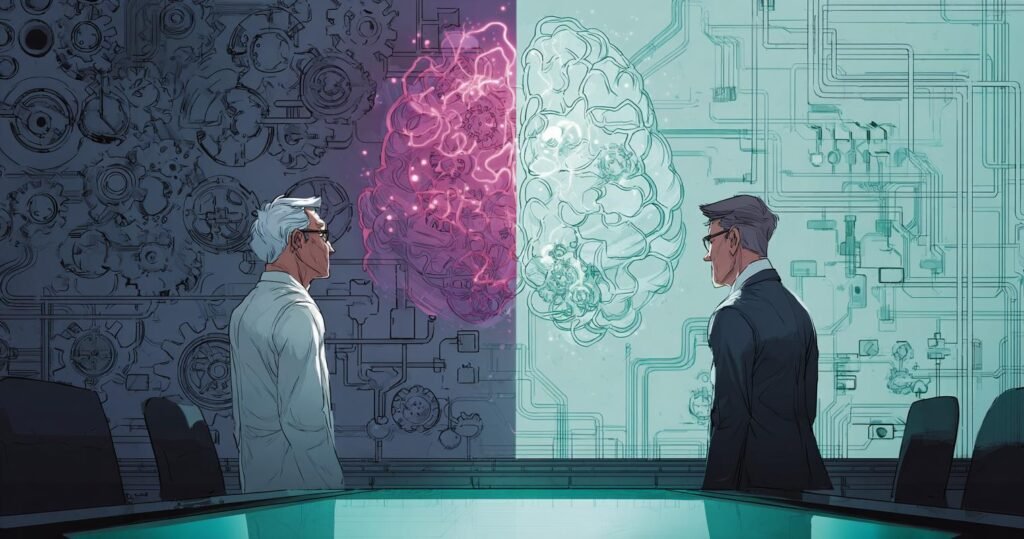


Customer insourcing is changing the traditional relationship between businesses and their service providers. For years, companies have relied on external partners for specialized expertise, operational support, technology, marketing, consulting, and other essential business functions. These relationships were built on a simple understanding: businesses could achieve better results by working with experts rather than developing every capability internally.
However, that understanding is evolving.
Today, customers are becoming increasingly capable of performing activities they once outsourced. They are investing in technology, building internal teams, adopting artificial intelligence, and creating systems that reduce their dependence on external vendors. What was once considered a specialized service can increasingly be managed through a combination of internal expertise and technology.
This creates an interesting challenge for B2B service providers. The customers they serve today may eventually develop the capabilities to compete with them tomorrow. A marketing agency’s client may build an internal marketing team. A consulting firm’s customer may develop its own strategic capabilities. A business that once outsourced research may begin using AI-powered platforms to manage intelligence and analysis internally.
This shift does not necessarily indicate dissatisfaction with existing partnerships. Instead, it reflects a broader transformation in how businesses access expertise, build capabilities, and make operational decisions.
The question for service providers is no longer simply how to acquire and retain customers. It is how to remain valuable when those customers become more independent.
The Rise of Customer Insourcing: Why Businesses Are Becoming More Independent
Customer insourcing is gaining relevance as technology makes it easier for businesses to develop capabilities that previously required external specialists.
Traditionally, building an internal function involved considerable investment in recruitment, training, infrastructure, software, and operational management. For many small and mid-sized organizations, outsourcing was often the more practical option.
That equation is changing.
Cloud computing, artificial intelligence, automation platforms, and low-code technologies have lowered many of the barriers associated with developing internal business capabilities. Organizations can now accomplish certain tasks with smaller teams, accessible software, and increasingly sophisticated digital tools.


For example, a business that previously depended on an external marketing agency for campaign execution may now use AI-powered platforms to generate content ideas, analyze campaign performance, automate communication, and manage routine marketing activities.
Similarly, sales teams can use integrated platforms to research prospects, organize customer information, identify potential opportunities, and automate parts of their outreach processes.
Some of the major factors driving this transition include:
- Accessible technology: Cloud platforms and subscription-based software make sophisticated business tools available without significant infrastructure investments.
- Artificial intelligence: AI can support research, content development, data analysis, customer communication, and routine operational activities.
- Automation: Businesses can reduce repetitive manual work and manage certain processes with fewer resources.
- Internal capability development: Organizations increasingly recognize the long-term value of building knowledge and expertise within their own teams.
- Greater control: Managing certain functions internally can provide businesses with more direct control over processes, priorities, and information.
For B2B service providers, this means customers are becoming more selective about what they outsource. Services that primarily involve repeatable execution may become easier to internalize, while specialized expertise and strategic problem-solving can retain their importance.
The challenge is to understand which parts of the service offering customers may eventually manage themselves and where external expertise continues to create meaningful advantages.
B2B Service Providers Are No Longer Competing Only Against Other Vendors –
Traditionally, businesses in the B2B services industry have competed against other service providers. Marketing agencies competed for marketing contracts, consulting firms competed for advisory projects, and technology companies competed for implementation and support engagements.
However, customer insourcing introduces another competitor: the customer’s internal team.
Consider a company purchasing lead generation services from an external agency. Initially, the agency may manage prospect research, database development, campaign execution, and outreach. Over time, the customer may invest in sales intelligence platforms, adopt automation software, and hire internal employees to manage these activities.
The agency is now competing against an internal alternative.


Examples of Customer Insourcing Across B2B Industries –
Digital marketing and advertising
Businesses may initially outsource content marketing, campaign management, SEO, and social media operations. As their internal marketing capabilities improve, they may bring routine activities in-house while retaining external agencies for specialized strategy and complex campaigns.
Consulting and business advisory
Organizations may hire consultants to improve operational processes, implement business frameworks, and establish performance measurement systems. Once internal teams understand these processes, they may independently manage many ongoing activities.
Research and business intelligence
Companies that previously outsourced market research and prospect identification may begin using AI-powered research tools, industry databases, and internal analytics capabilities.
Technology and IT services
Organizations may initially depend on external technology partners for implementation, integration, and support. As their internal IT capabilities mature, they may take ownership of routine activities while continuing to engage external specialists for complex requirements.
This changes the competitive landscape for B2B service providers.
They must now demonstrate why working with an external partner delivers better business outcomes than building and managing the same capability internally.
The strongest arguments increasingly revolve around:
- Access to specialized expertise that is difficult to maintain internally.
- Faster execution and the ability to scale resources when required.
- Better quality, consistency, and process maturity.
- Industry knowledge and insights that go beyond routine execution.
- Measurable improvements in business performance.
Simply being able to perform a task is no longer enough to establish a sustainable competitive advantage.
When Customers Learn From You, They May Eventually Need You Less –
One of the most interesting aspects of long-term B2B partnerships is that service providers often contribute to their customers’ growing independence.
A successful relationship naturally involves knowledge sharing, process improvements, training, technology adoption, and the transfer of expertise. These activities help customers become more capable and improve their internal operations.
However, they can also reduce the customer’s dependence on the original service provider.


For example, a consulting company may help an enterprise redesign its operational processes, establish internal performance management systems, and train employees to manage those processes effectively.
Initially, the organization may require extensive external support. But once the new systems are established and employees become familiar with them, the need for ongoing consulting assistance may decline.
Similarly, a technology partner may implement automated workflows that significantly reduce the requirement for manual intervention. The customer benefits from improved efficiency, while the provider may find that its original service is no longer required at the same level.
This creates an interesting paradox: the better a service provider performs its job, the more capable its customer may become.
However, this should not automatically be considered a failure.
The real opportunity lies in recognizing that customer requirements evolve as their capabilities improve.
Rather than continuing to sell the same service, providers should identify the next set of challenges their customers are likely to encounter.
This could include:
- Moving from basic implementation to advanced technology optimization.
- Expanding from operational support to strategic consulting.
- Replacing routine execution with specialized problem-solving.
- Introducing new capabilities as customer requirements become more sophisticated.
- Helping customers improve the performance of their newly developed internal systems.
The goal should be to grow alongside customers rather than remain dependent on their original limitations.
Operational Dependency Is Not a Sustainable Competitive Advantage –
For business leaders, this transformation raises an important question:
Is the company creating long-term value for customers, or is it simply providing a service that customers may eventually learn to manage themselves?
The distinction is critical.
If a service provider remains relevant primarily because its customer lacks the knowledge, employees, or technology to perform a particular task, its competitive position may weaken as soon as those limitations disappear.
Operational dependency can support a business relationship, but it does not necessarily create lasting customer loyalty.
A customer may continue working with a vendor because switching is inconvenient, internal resources are limited, or the existing arrangement is familiar. However, these conditions can change.
A more sustainable relationship is built on value that customers recognize even when they have the option to manage activities independently.
Building Competitive Advantages That Customers Cannot Easily Replicate –
B2B service providers should focus on developing capabilities that go beyond routine service delivery.
Some important areas include
Deep industry understanding:
Understanding industry-specific challenges, market dynamics, regulatory considerations, and customer behavior can create value that is difficult to reproduce through technology alone.
Specialized expertise:
Some business challenges require experience, technical knowledge, and multidisciplinary capabilities that may not be practical for a customer to maintain internally.
Speed and scalability:
External partners can provide access to resources and expertise without requiring customers to build and manage an entire internal function.
Proactive problem-solving:
The ability to identify emerging challenges and recommend improvements before customers recognize the need can strengthen long-term relationships.
Measurable business outcomes:
Customers are more likely to recognize the value of a partnership when it contributes directly to business performance rather than simply completing assigned activities.
The shift is from being a supplier of services to becoming a strategic contributor to business growth.
That distinction can determine whether a company remains a replaceable vendor or becomes a trusted long-term partner.
Artificial Intelligence Will Accelerate Customer Independence –
Artificial intelligence will play an important role in the evolution of customer insourcing.
AI tools are making it easier for organizations to perform activities that previously required significant manual effort or specialized resources. From content creation and market research to customer support, sales intelligence, and workflow automation, AI is expanding what internal teams can accomplish.
This does not mean that external service providers will automatically become irrelevant.
In many situations, AI reduces the effort required to execute a task without eliminating the expertise required to achieve the right outcome.

For example, a company may have access to an AI-powered research platform, but that does not guarantee that it can identify the right target market, evaluate data quality, interpret market signals, or translate research findings into a successful business strategy.
Similarly, having access to marketing automation software does not automatically result in effective demand generation.
Organizations still need people who understand how to connect technology with business objectives.
The Future of B2B Relationships Will Be Based on Choice, Not Dependency –
The traditional outsourcing model was often built around capability gaps. Businesses outsourced activities because they lacked the employees, technology, expertise, or resources to perform them internally.
As these gaps become smaller, the relationship between customers and service providers will increasingly depend on the value of collaboration rather than operational necessity.
Customers will want greater control over their internal capabilities while continuing to access external expertise where it creates a meaningful advantage.


This may result in more flexible partnership models.
For example, a company may maintain an internal marketing team while engaging an external agency for specialized campaigns, advanced analytics, or strategic planning. An enterprise may manage routine technology operations internally while relying on external specialists for complex integrations and emerging technology requirements.
In these arrangements, the customer is not choosing between complete outsourcing and complete internal ownership. Instead, it is combining internal and external capabilities according to business priorities.
This creates opportunities for service providers that can adapt their offerings to more collaborative operating models.
The future may increasingly belong to businesses that can work effectively alongside customers’ internal teams, complement existing capabilities, and provide expertise when it matters most.
Ultimately, customer independence does not have to weaken a business relationship. It can create the foundation for a more mature partnership in which both organizations contribute their strongest capabilities.
Conclusion –
Customer insourcing is changing the competitive dynamics of the B2B services industry. As businesses gain access to artificial intelligence, automation, cloud platforms, and specialized software, they are becoming increasingly capable of managing activities that were traditionally outsourced.
For service providers, this creates a new reality. Their customers are no longer competing only with other vendors when making outsourcing decisions. They are also evaluating whether building the required capabilities internally could deliver better control, flexibility, or long-term value.
The answer is not to discourage customers from becoming more independent. Instead, businesses must evolve beyond routine service delivery and build relationships around expertise, innovation, strategic thinking, and measurable outcomes.
Artificial intelligence will accelerate this transition, but it will also create opportunities for providers that know how to combine technology with practical business knowledge.
The most successful service providers will be those that continuously anticipate customer needs, introduce new capabilities, and remain relevant as their clients grow.
After all, the strongest customer relationship is not one in which a client has no alternative. It is one in which the client has alternatives, has the capability to choose differently, and still chooses to work with you because the partnership creates value that is difficult to replicate.
Frequently Asked Questions
Customer insourcing refers to the process through which businesses develop internal capabilities to perform activities they previously outsourced to external service providers. This can involve hiring internal employees, adopting technology, implementing automation, and using AI-powered tools to manage business functions independently.
Customers are gaining access to advanced technology, automation platforms, artificial intelligence, and specialized software that make it easier to perform previously outsourced activities. As internal expertise and technological capabilities improve, some businesses may choose to manage these functions themselves rather than continue depending entirely on external vendors.
Artificial intelligence can reduce the time, resources, and manual effort required to perform many business activities. This may encourage organizations to bring certain outsourced functions in-house. However, AI does not automatically replace strategic expertise, industry knowledge, or complex problem-solving, creating new opportunities for specialized service providers.
No. Customer insourcing changes the type of value customers expect from external partners rather than eliminating the need for them. Service providers that offer specialized expertise, strategic guidance, scalability, innovation, and measurable business outcomes can continue to play an important role.
Service providers can strengthen customer relationships by moving beyond routine execution, adopting relevant technologies, providing proactive recommendations, and demonstrating measurable business value. They should also continuously introduce new capabilities that address customers’ evolving requirements.