


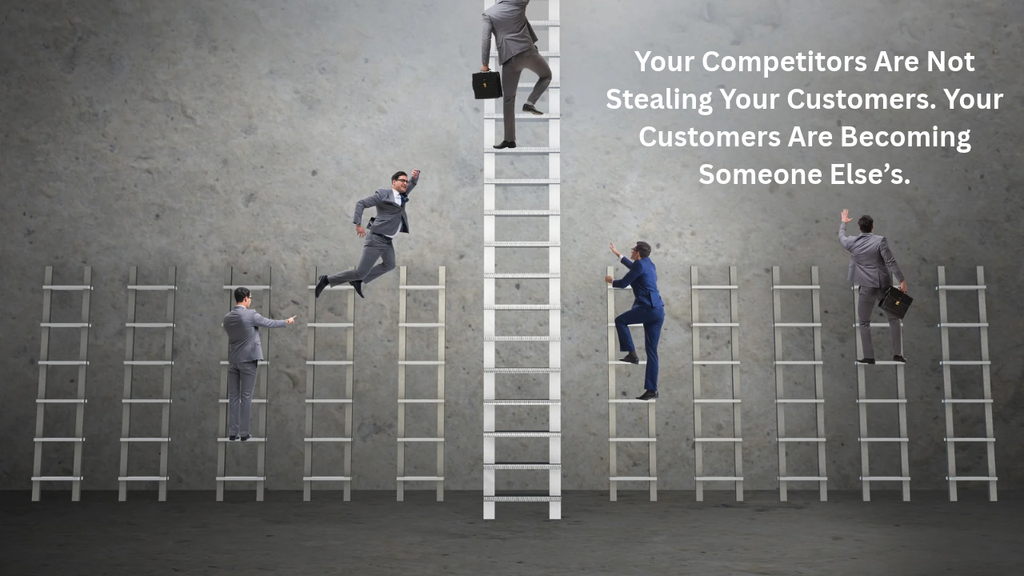
B2B customer retention has traditionally been built around a relatively straightforward assumption: if customers are satisfied, they will continue doing business with you. Organizations invest heavily in customer relationships, account management, personalized communication, loyalty initiatives, and customer support to maintain long-term partnerships. The underlying belief is that delivering consistent value will naturally translate into customer loyalty. However, the modern business environment is challenging this assumption in ways that many organizations are only beginning to understand.
Customers are no longer necessarily leaving because a competitor offers a better product, a lower price, or a more attractive service. Sometimes, they leave because their own priorities, expectations, and business requirements have fundamentally changed. A customer who was once perfectly satisfied with a service may suddenly discover that the service no longer supports its organizational direction. The supplier has not necessarily become worse. The customer has simply evolved.
This creates a new challenge for businesses. Customer retention is no longer just about maintaining satisfaction or defending existing relationships. It is about understanding how customers are changing, anticipating their future requirements, and ensuring that your business remains relevant as their needs evolve. In this environment, the biggest competitive threat may not be another company trying to win your customer. It may be the customer becoming an entirely different kind of business.
The Traditional Understanding of Competition Is Changing –
For decades, businesses have approached competition through a relatively conventional framework. Companies identify competitors, compare pricing, analyze product features, improve service quality, and develop strategies to prevent customers from switching to alternative providers.
This approach assumes that customers are evaluating multiple businesses offering similar solutions. If a customer leaves, the logical explanation is that another provider has delivered something better, faster, or more affordable.
While this remains relevant, it does not explain every instance of customer churn.
Increasingly, organizations are comparing their existing solutions against entirely new ways of operating. Instead of choosing between two service providers, they may decide that they no longer need that category of service in its traditional form.
Consider a few examples:
- A company that previously depended on an external marketing agency may begin building an internal, AI-powered marketing team.
- An organization that relied on management consultants may invest in specialized analytics platforms that allow internal teams to perform similar functions.
- A business working with multiple technology vendors may consolidate its requirements into a unified enterprise platform.
- A company that outsourced customer support may introduce intelligent automation to handle routine customer interactions internally.
In these situations, the original supplier is not necessarily losing a direct competition against another provider. The customer is changing its operating model.
This distinction is important because traditional competitor analysis cannot fully explain or predict this type of customer departure. Businesses must expand their understanding of competition beyond other companies and begin examining the changing strategies of their own customers.
Why Customer Satisfaction No Longer Guarantees Customer Retention –
One of the biggest mistakes organizations make is treating customer satisfaction as evidence of long-term business security.
Customer satisfaction measures how effectively a company meets existing expectations. However, it does not establish whether those expectations will remain unchanged over time.
A customer may consistently give positive feedback, appreciate the quality of service, maintain a strong relationship with its account manager, and renew contracts without hesitation. Yet the same customer may already be considering a completely different approach to solving its business challenges.
This creates a gap between customer satisfaction and long-term customer relevance.
The difference between satisfaction and relevance –
Customer satisfaction focuses on the present relationship. Customer relevance focuses on whether that relationship will continue to support the customer’s future objectives.
For example, a technology services company may provide reliable infrastructure management to an enterprise client. The client is satisfied with system performance, support responsiveness, and service reliability.
However, the client may simultaneously be planning a cloud transformation that changes its infrastructure requirements. If the service provider continues offering the same traditional model without adapting its capabilities, the relationship may gradually lose strategic importance.
The service provider has performed well against the original agreement, but it has not necessarily adapted to the customer’s next stage of development.
Businesses should therefore recognize several important distinctions:
- Customer satisfaction: Is the customer happy with the current service?
- Customer loyalty: Does the customer prefer to continue the relationship?
- Customer relevance: Does the business still support the customer’s changing priorities?
- Future alignment: Can the supplier contribute to the customer’s upcoming business objectives?
Strong B2B customer retention requires attention to all four dimensions.
Organizational Transformation Can Quietly Increase Customer Churn Risk –
B2B relationships are often built over several years. They involve multiple stakeholders, established processes, contractual commitments, and considerable operational familiarity.
Organizations may assume that these factors create natural protection against customer churn. However, organizational transformation can weaken these advantages surprisingly quickly.
A new CEO may introduce a different business strategy. A procurement department may reconsider existing vendor relationships. A technology leader may introduce an enterprise-wide automation initiative. A newly appointed department head may evaluate suppliers using completely different criteria.
The person who originally selected a supplier may no longer participate in the decision-making process.
Consequently, the priorities that once made a supplier valuable may no longer carry the same importance.
How changing business priorities affect supplier relationships –
Consider an enterprise that has worked with a traditional software development partner for several years. The relationship is stable, communication is effective, and delivery expectations are consistently met.
However, the enterprise appoints a new technology leadership team with a mandate to accelerate digital transformation.
The new leadership begins prioritizing:
- Cloud-native architecture and scalable infrastructure.
- AI integration and workflow automation.
- Seamless integration with existing enterprise systems.
- Faster product development and deployment.
- Greater operational visibility and cost efficiency.
If the existing technology partner continues operating with the same delivery model and service capabilities, the relationship may become increasingly difficult to justify.
The problem is not necessarily poor performance. It is a growing mismatch between the supplier’s capabilities and the customer’s strategic direction.
For B2B organizations, this means customer retention must account for changes happening inside the customer’s business, not just changes in its purchasing behavior.
The Biggest Warning Signs of Customer Evolution Are Often Invisible –
Traditional customer retention programs frequently rely on measurable indicators such as satisfaction scores, renewal rates, support tickets, contract values, and account engagement.
These metrics are valuable, but they primarily describe the existing customer relationship. They may not reveal whether the customer’s future requirements are changing.
This is why businesses sometimes receive positive customer feedback right until the moment a contract is not renewed.
A customer may appear commercially healthy while gradually moving toward a different operating model.
Signals that indicate changing customer requirements –
Organizations should develop a more comprehensive understanding of customer evolution by examining signals beyond routine account activity.
Some important indicators include:
1. Changes in technology investments
If a customer begins investing heavily in automation, artificial intelligence, cloud platforms, or enterprise software, its future requirements may differ significantly from its current ones.
2. Changes in organizational leadership
New executives often introduce new priorities, operational strategies, and vendor evaluation criteria. These changes can influence long-standing supplier relationships.
3. Changes in hiring patterns
The recruitment of internal technology specialists, data scientists, automation engineers, or digital transformation leaders may indicate that a customer is developing capabilities previously obtained from external providers.
4. Changes in business strategy
Expansion into new markets, operational restructuring, mergers, acquisitions, and business model changes can create entirely different customer requirements.
5. Changes in purchasing behavior
Reduced engagement, revised procurement criteria, increased interest in integrated solutions, or requests for new capabilities may indicate that the customer is reassessing its existing relationships.
The objective is not to interpret every organizational change as an immediate churn risk. It is to recognize patterns early enough to understand whether the existing relationship remains aligned with the customer’s future direction.
B2B Customer Retention Requires a Shift Toward Customer Intelligence –
If businesses want to retain customers over the long term, they need to move beyond asking whether customers are satisfied.
They must begin understanding what their customers are becoming.
This requires a more strategic approach to customer intelligence. Instead of focusing exclusively on historical transactions, organizations should develop a broader understanding of customer operations, technology investments, business objectives, and emerging challenges.
Customer intelligence should help answer questions such as:
- What business priorities will influence the customer’s decisions over the next few years?
- Which technologies is the customer planning to adopt?
- Is the organization developing internal capabilities that could replace existing outsourced services?
- Are its operational requirements changing?
- What new challenges could create opportunities for the existing supplier?
- Are current products and services aligned with its future strategy?
Moving from account management to strategic customer understanding –
Traditional account management often concentrates on maintaining communication, resolving issues, managing contracts, and identifying immediate sales opportunities.
Strategic customer intelligence goes further.
It connects customer relationships with business transformation, market developments, technology adoption, and future operational requirements.
For example, a B2B technology provider working with a manufacturing enterprise should understand more than its software requirements. It should also pay attention to the customer’s automation initiatives, supply chain priorities, data management needs, and digital manufacturing strategy.
This broader perspective allows the provider to identify opportunities to support the customer as its business evolves.
Technology can also strengthen this approach through:
- CRM platforms that centralize customer relationship information.
- Customer success platforms that monitor account health and engagement.
- Business intelligence tools that identify patterns in customer activity.
- AI-powered analytics that help identify emerging risks and opportunities.
- Integrated data platforms that provide a more complete view of customer interactions.
The goal is to transform customer information into actionable business intelligence rather than simply collecting more data.
Innovation Must Anticipate Future Customer Needs, Not Just Improve Existing Products
Many organizations develop new products and services by analyzing customer feedback, studying competitor offerings, and responding to current market demand.
These activities are essential, but they can also create a limitation.
Customer feedback often reflects the problems customers understand today. It may not reveal the challenges they will face after adopting new technologies, changing business models, or restructuring their operations.
Organizations that focus exclusively on improving existing offerings risk becoming exceptionally good at solving problems their customers are gradually moving away from.
Why future-focused innovation matters –
Consider a traditional business consulting firm whose customers increasingly adopt AI-powered analytics and workflow automation.
If the firm focuses exclusively on improving the delivery of conventional consulting services, it may eventually find that its customers require a different kind of support.
However, if it recognizes the transformation early, it can explore new service models involving:
- AI implementation and integration.
- Data-driven business transformation.
- Enterprise workflow optimization.
- Technology strategy and advisory services.
- Automation governance and operational consulting.
The company is not abandoning its original expertise. It is adapting that expertise to remain useful in a changing business environment.
This principle applies across B2B technology, software, IT services, consulting, manufacturing, financial services, and other enterprise markets.
Innovation should not only answer the question, “How can we improve what customers currently purchase?”
It should also address a more important question: “What will customers need when their businesses operate differently?”
7. Seven Practical Strategies to Strengthen B2B Customer Retention –
Understanding customer evolution is only the first step. Organizations must translate that understanding into practical customer retention strategies.
The objective is to build relationships that remain valuable even as customer priorities, technologies, and operating models change.
Conduct Strategic Customer Conversations
Move beyond routine performance reviews and contractual discussions.
Regularly engage senior stakeholders to understand their business objectives, upcoming investments, operational challenges, and transformation priorities.
These conversations can reveal opportunities and risks that traditional account reviews may overlook.
Monitor Changes in Customer Technology Adoption
Pay attention to the technologies customers are implementing and the capabilities they are developing internally.
For technology providers, understanding a customer’s adoption of AI, cloud computing, automation, cybersecurity, and data platforms can help identify changing requirements.
Reassess Customer Value Regularly
Do not assume that a product or service that was valuable three years ago will remain equally important today.
Periodically evaluate whether your offerings continue to support the customer’s business objectives and identify where additional value could be delivered.
Build Relationships Beyond a Single Decision-Maker
Long-term B2B relationships should not depend entirely on one contact.
Develop relationships across business leadership, procurement, operations, technology, finance, and other relevant departments.
This creates a broader understanding of the customer’s priorities and reduces dependence on individual stakeholder relationships.
Invest in Continuous Service Innovation
Regularly review your products, services, and delivery models.
Look for opportunities to introduce automation, improve integration, strengthen scalability, and address emerging customer challenges.
Innovation should be connected to customer transformation rather than driven exclusively by internal product roadmaps.
Use Customer Data to Identify Emerging Risks
Bring together information from CRM systems, customer support platforms, sales interactions, renewal discussions, and account reviews.
Analyzing these signals collectively can help organizations identify changes in engagement, requirements, and account health.
Position Your Business as a Strategic Partner
Move beyond being viewed as a supplier that delivers a specific product or service.
Demonstrate an understanding of the customer’s broader business objectives and identify practical ways to support its future development.
When customers view a supplier as a strategic contributor to their success, the relationship can become more adaptable and valuable over time.
The Future of Customer Retention Belongs to Businesses That Evolve With Their Customers –
The future of B2B customer retention will increasingly depend on an organization’s ability to adapt alongside its customers.
As AI, automation, cloud computing, digital platforms, and evolving business models reshape enterprise operations, customer requirements will continue to change.
This means businesses cannot depend entirely on historical relationships, established contracts, or previous customer satisfaction.
They must build the capabilities to understand changing customer expectations and respond with relevant solutions.
From reactive retention to proactive relevance
Traditional retention strategies often become active when a customer reports dissatisfaction, reduces spending, raises concerns, or approaches contract renewal.
A more forward-looking approach begins much earlier.
It involves understanding the customer’s strategic direction, identifying potential changes in its operating model, and exploring opportunities to remain valuable as those changes happen.
For enterprise technology companies, this may mean evolving from conventional software delivery toward integrated digital solutions, AI-enabled services, automation, or technology consulting.
For professional services firms, it may involve combining existing expertise with new digital capabilities.
For SaaS providers, it may require continuous product innovation, better integrations, and greater alignment with changing enterprise workflows.
The common principle is that customer relationships must evolve alongside customer businesses.
A company that continuously adapts its value proposition is better positioned to remain relevant than one that assumes yesterday’s success guarantees tomorrow’s loyalty.
Conclusion –
The biggest threat to customer retention may not be a competitor offering a better price, a more advanced product, or a more attractive service. It may be the customer developing a completely different set of priorities, capabilities, and business requirements.
For years, organizations have focused on retaining customers by improving satisfaction, strengthening relationships, and delivering consistent service. These activities remain important, but they are no longer sufficient on their own. Businesses must also understand how customers are transforming and whether their existing offerings will remain relevant in the future.
B2B customer retention must therefore evolve from a relationship management exercise into a continuous process of customer understanding, strategic alignment, and innovation.
Organizations that invest in customer intelligence, anticipate changing requirements, embrace emerging technologies, and adapt their value propositions will be better positioned to maintain long-term customer relationships.
Frequently Asked Questions
B2B customer retention refers to a company’s ability to maintain long-term business relationships with its customers and encourage continued engagement, repeat purchases, and contract renewals. It involves delivering consistent value, understanding customer requirements, maintaining strong relationships, and adapting to changing business needs.
Customer satisfaction reflects how well a business meets current expectations. However, customer priorities and operational requirements can change over time. A customer may be completely satisfied with an existing service but decide to adopt a different technology, operating model, or internal capability that makes the service less relevant.
Common causes include changing business priorities, poor service experiences, budget constraints, evolving technology requirements, organizational restructuring, changing leadership, and the adoption of alternative operating models. Customers may also leave when existing suppliers fail to adapt to their future requirements.
Businesses can monitor changes in customer engagement, purchasing behavior, technology investments, organizational leadership, hiring patterns, and strategic priorities. Regular conversations with key stakeholders and a comprehensive view of customer data can help identify potential retention risks earlier.
Technology can improve customer retention by helping organizations understand customer behavior, identify potential risks, personalize engagement, and deliver more relevant services. CRM platforms, customer success software, business intelligence, and AI-powered analytics can provide valuable insights into customer relationships and evolving requirements.