Physical Address
304 North Cardinal St.
Dorchester Center, MA 02124
Physical Address
304 North Cardinal St.
Dorchester Center, MA 02124

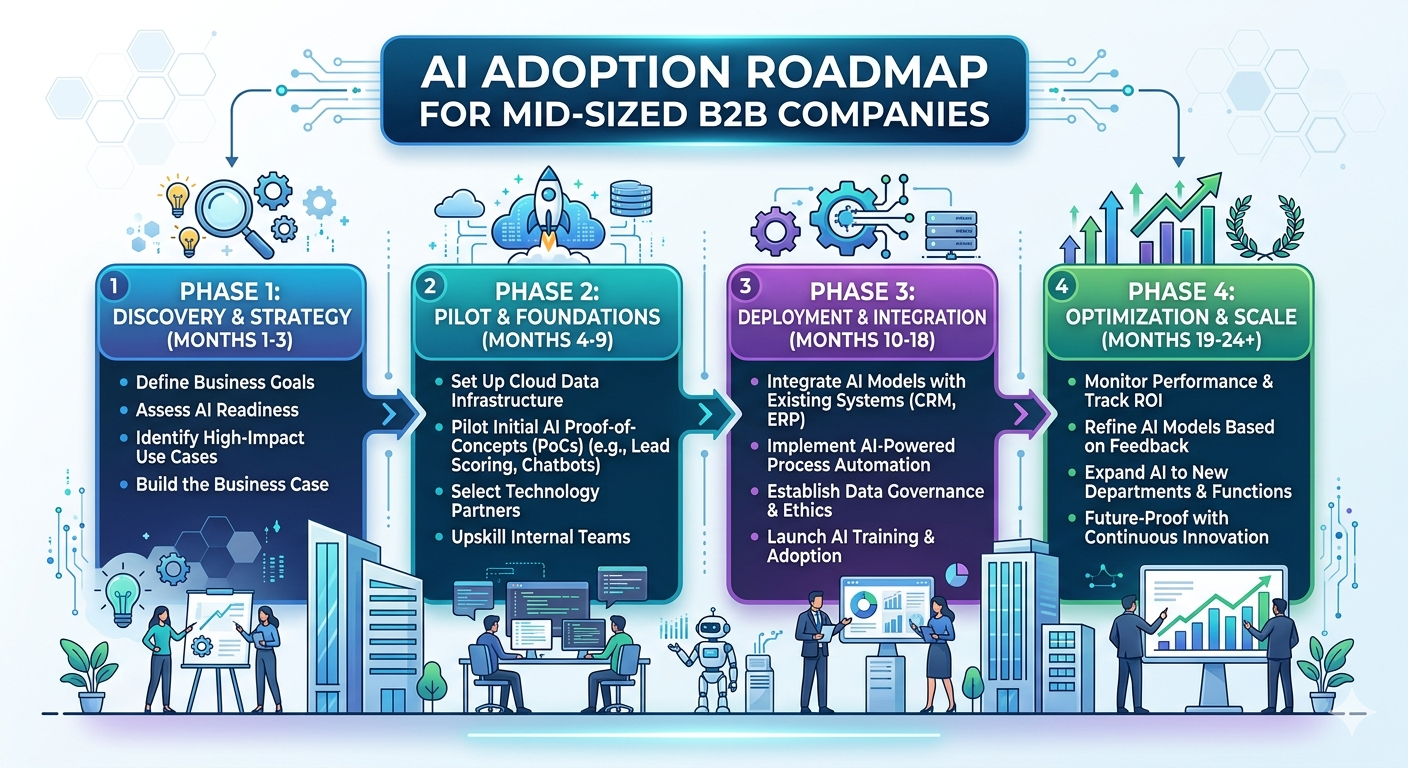
AI Adoption Roadmap for Mid-Sized B2B Companies
Artificial intelligence is no longer reserved for large enterprises with massive budgets and dedicated data science teams. Mid-sized B2B companies are increasingly finding themselves at a critical crossroads: adopt AI strategically or risk falling behind competitors who are already leveraging it for efficiency, insights, and growth. However, jumping into AI without a clear roadmap often leads to wasted resources, failed implementations, and internal resistance. A structured, phased approach is essential to ensure meaningful outcomes.
Understanding the Business Case for AI
Before investing in any AI solution, organizations must clearly define why they need it. AI should not be adopted for the sake of innovation alone—it must align with business objectives such as revenue growth, cost reduction, or operational efficiency. Mid-sized companies typically operate with tighter budgets, making it even more important to prioritize high-impact use cases.
For example, a B2B company might identify opportunities in areas like sales forecasting, customer support automation, or demand planning. Instead of attempting a company-wide transformation immediately, focusing on specific pain points helps build early momentum and measurable success.
Assessing Data Readiness and Infrastructure
AI systems rely heavily on data, and many mid-sized organizations underestimate the effort required to prepare it. Data is often siloed across departments, inconsistent in format, or incomplete. Without a solid data foundation, even the most advanced AI tools will fail to deliver value.
Companies should evaluate:
Investing in data cleaning, integration, and management at this stage will significantly improve the success rate of future AI initiatives.
Identifying High-Impact Use Cases
Not all AI applications are equally valuable. The key is to prioritize initiatives that offer quick wins while also supporting long-term strategic goals. Mid-sized B2B firms should look for use cases that are both feasible and impactful.
Some common high-value use cases include:
By starting with one or two well-defined use cases, companies can demonstrate ROI early and build internal confidence.
Building the Right Team and Skills
AI adoption is not just a technology shift—it’s a people and culture transformation. Mid-sized companies often lack in-house AI expertise, which can slow down progress. Rather than trying to build a large team immediately, organizations can take a hybrid approach.
They may:
Equally important is fostering a culture that embraces data-driven decision-making. Leadership must actively support AI initiatives and encourage collaboration across departments.
Choosing the Right Tools and Technologies
The AI ecosystem is vast, with countless tools available for different business needs. Mid-sized companies should avoid overcomplicating their tech stack and instead focus on scalable, easy-to-integrate solutions.
When evaluating tools, consider:
Cloud-based AI platforms are often a good starting point, as they reduce infrastructure costs and allow for faster deployment.
Implementing Pilot Projects
Rather than rolling out AI across the entire organization, successful companies begin with pilot projects. These smaller initiatives allow teams to test assumptions, measure performance, and identify potential challenges before scaling.
A strong pilot project should:
The goal is not perfection but learning. Even if a pilot does not deliver expected results, it provides valuable insights for future efforts.
Scaling and Integration Across the Organization
Once pilot projects demonstrate success, the next step is scaling AI across departments. This requires careful planning to ensure consistency, efficiency, and alignment with business goals.
Scaling involves:
At this stage, governance becomes crucial. Companies must establish clear policies around data usage, compliance, and ethical AI practices.
Managing Change and Driving Adoption
One of the biggest barriers to AI adoption is not technology—it’s resistance to change. Employees may fear job displacement or struggle to adapt to new systems. Addressing these concerns proactively is essential.
Organizations should:
A well-managed change strategy ensures that AI becomes a tool for empowerment rather than disruption.
Measuring ROI and Continuous Improvement
AI is not a one-time implementation—it’s an ongoing journey. Companies must continuously evaluate performance and refine their approach. Tracking ROI helps justify further investment and ensures alignment with business objectives.
Key metrics may include:
Regular reviews allow organizations to identify what’s working, what isn’t, and where to optimize.
Conclusion
Adopting AI in a mid-sized B2B company is both an opportunity and a challenge. Success depends not on the size of the investment, but on the clarity of the strategy and the discipline of execution. By starting with a clear business case, building a strong data foundation, and focusing on high-impact use cases, companies can unlock meaningful value without overwhelming their resources.
A phased approach—beginning with pilots and gradually scaling—helps reduce risk while building internal confidence. At the same time, investing in people, culture, and change management ensures long-term sustainability. Ultimately, AI adoption is not just about technology; it’s about transforming how a business operates, competes, and grows in an increasingly data-driven world.